Il y a quelques temps, on vous parlait de Diama, premier album du groupe marseillais Sunbeam Overdrive, qu’on a adoré! Il est dors et déjà disponible via Tentacles Industries. Aujourd’hui, il est temps d’en découvrir plus sur ce projet et cet album avec cette interview de Tom, guitariste de la formation. Il nous parle de la genèse du groupe et de cette première sortie, ainsi que de ses coups de cœurs musicaux et de la scène marseillaise.
Propos recueillis par Victor BRUNERIE
English version below
Peux tu commencer par te présenter et présenter Sunbeam Overdrive?
Alors c’est lié, puisque Sunbeam Overdrive est un groupe qui s’est crée à partir d’un projet à moi. Je m’appelle Thomas, je suis guitariste dans le groupe et je suis de Marseille comme le reste du groupe. Le groupe est composé de Karim au chant, Laurent à la batterie et Bruno à la basse. C’est un groupe qui est né de la mise en stand-by de Tom Abrigan And The Shrunken Heads (TBSH dans le reste de l’article, ndlr). C’était du rock progressif à guitare, ça s’apparentait un peu à Whinery Dogs et ce genre de projets par exemple. Et puis au fur et à mesure qu’on a travaillé sur les morceaux, le son s’est durcit et c’est véritablement devenu de la musique de groupe. Et du coup est né Sunbeam Overdrive, qui était le nom d’un morceau de TBSH qui parlait des records de vitesse établis au lac salé de Bonneville au début du siècle dernier.
Quand avez vous décidé de commencer à travailler sur cette première sortie?
Ca a pas été évident tout de suite, parce que finalement quand Sunbeam Overdrive est né, j’étais chanteur lead, et il y avait un autre guitariste dans le groupe. On a donné le premier concert du groupe à L’Euroblast 2019 et en fait on jouait encore la musique de TBSH ainsi que trois nouvelles compos qui ressemblaient hypothétiquement à ce que le nouveau groupe allait pouvoir devenir. Mais les choses ont été encore en mouvement, puisque par la suite j’ai plus trop voulu assumer le rôle de chanteur et je voulais rester plus sur mon instrument. J’avais rencontré il y a déjà plusieurs années de ça, Karim et je trouvais que c’était un chanteur extraordinaire. Et du coup, je lui ai proposé de rejoindre le groupe en tant que chanteur lead. Il nous a rejoint et c’est là qu’on a vraiment pu commencer à réfléchir au son du groupe. On est tout de suite partis dans la compo puisqu’on était en pleine période Covid en 2020 et du coup il y a eu beaucoup de décisions de prises sur le son du groupe à ce moment là: comme l’accordage ce genre de choses là. Quand Karim est arrivé on a lancé plein de lignes, plein de sujets et c’est comme ça que le son du groupe s’est formé petit à petit. Ca a été un peu fou fou, pas vraiment contrôlé. Karim et moi on était déjà bons potes et on était dans une période de bouleversements dans nos vies, et au final on ressentait pas mal de choses pas super maîtrisées. Mais du coup tout ça, ça a écrit ce premier album. Est ce qu’on pourrait parler de style pré défini, je sais même pas. On fait ce qui nous plait, on a lancé ça comme ça. Evidemment ce qu’on fera par la suite sera dans cette lignée là, mais là j’arrive même pas à te dire, par exemple, quand on a lancé la compo de tel ou tel morceau tellement c’était sur l’instant.
En fait cet album est un peu une découverte de ce que vous voulez faire avec ce nouveau projet?
Oui tout à fait ! On a mis des idées qui nous paraissaient intéressantes. On ne voulait pas faire quelque chose qu’on avait véritablement déjà entendu. Ca nous servait à rien de faire du Soundgarden ou du Periphery ou toutes les autres influences qu’on avait. Mais on s’est dit qu’entremêlées elle étaient déjà un peu particulières. Le melting pot entre le grunge et le néo progressif et le djent c’est déjà quelque chose d’un peu particulier à citer. Et du coup on a qu’a essayé de tenter de faire ça et on verra ce que ça donne. On avait plus une esthétique générale dans la tête. On s’est pas dit, là il faut faire du grunge ou du djent. C’était vraiment des émotions sur l’instants. C’est pour ça que à mon sens les titres ne se ressemblent pas vraiment non plus mais il y a une ligne assez cohérente. Tu as du lent, du rapide, du rock’n’roll, du plus aérien. Il y avait une sorte de système mélodique de fond et ensuite on a fait ce qu’on voulait au niveau rythmique et son.
Qu’est ce que vous vouliez raconter avec ce premier album?
Si on parle des textes, on va dire que c’est autant autobiographique que des faits divers de société ou de la philosophie comme pour le morceau « Out Of Plato’s Cave ». On parle un peu d’Histoire, où on se pose des questions sur l’Histoire. Il y a d’un côté les textes des morceaux et leurs sujets, et à côté de ça musicalement parlant on voulait raconter autre chose. C’est un album à écouter à deux vitesses: soit tu rentres dans le texte et dans la musique mais sans trop y réfléchir, soit soit on initie un voyage et une ascension. C’est d’ailleurs pour ça qu’on l’a appelé Diama, qui est le nom d’un glacier à la face nord du Nanga Parbat. Pour nous, cet album est un voyage, et pour pouvoir l’effectuer il faut pas trop s’attacher aux textes. C’est une autre lecture de l’album. Je conseillerais même d’écouter ce disque dans sa voiture, la nuit et là on va comprendre le deuxième sens de l’album. Autant on pourrait rentrer dans le détail des textes et de la technique mais il y a clairement une deuxième lecture plus spirituelle et qui est notre propre voyage, ou en tout cas celui qu’on aimerait entreprendre dans nos vies.
Quels retours avez vous eu au moment de la sortie de « Out Of Plato’s Cave? », le premier extrait de l’album?
Ca a été super bien reçu. Après il y a quelque chose qui s’est passé, d’ailleurs j’en ai jamais vraiment parlé. En fait, j’ai eu un premier groupe de métal y’a des années de ça, Sonny Red,à la fin des années 90. Pour te donner une idée, on a jouer à la première édition du Hellfest! Et en fait, les gens qui connaissaient TBSH et qui ont découvert par la suite Sunbeam Overdrive se sont des gens qui s’intéressaient déjà à ce que je faisais par le passé et qui ont pour certains d’entre eux déjà entendu la musique de Sonny Red. Tout le monde dans Sunbeam a entendu ce que cet ancien groupe devait devenir. Donc même si TBSH et Sunbeam se sont deux musiques qui sont foncièrement différentes, finalement quand ont réunit les trois projets on entend des similitudes. Donc les gens n’ont pas été spécialement surpris par la musique, si ce n’est l’accordage un peu bas. Il y a vraiment un fil conducteur entre tous ces projets, et le gens qui suivent ne vont pas être si surpris que ça avec ce nouveau groupe, il peuvent être surpris par les détails mais pas dans la forme.
Et maintenant que l’album est sorti dans son intégralité, quels ont été les retours que vous avez eu?
Pour l’instant c’est super! On a été super bien reçu de la part de tout le monde. Alors pour le public il y a un côté affect. On est pas dans le détail souvent et moi j’aime bien ça. Ils veulent nous communiquer le fait qu’ils ont découvert le groupe et qu’ils trouvent ça super. Et il y a des gens qui rentrent un peu plus dans le détail. Concernant les médias, on a eu que des bons retours, sauf un. On a été surpris de certains médias qui ont complètement compris où on voulait en venir. Par ce que ce mélange entre le rock alternatif et le métal moderne ça nous paraissait assez fin. En tout cas nous on a assez mangé l’album pour se dire qu’on ne savait plus exactement où se retrouvaient chaque style, que le mélange était homogène. On s’est dit si les gens comprennent pas ça nous étonne pas, et au final on a eu de très très belles chroniques où les gens disaient que Diama est un album qu’il faut écouter dans le détail, parce que c’est dans le détail qu’on va comprendre que c’est une musique qu’on a véritablement pas encore entendu. C’est pas quelque chose de commun, même si de prime abord on dirait que oui. Quand on l’écoute plusieurs fois, on se dit que si on va écouter un autre album d’un autre groupe en se disant que ça y ressemble et ben en fait non pas tant que ça. Nous on voulait pas qu’en mettant l’album les gens se disent au bout de deux morceaux qu’ils préfèrent aller mettre du Alice In Chains par exemple. Et c’est ce qui ressort, qu’on a une singularité et que les gens l’ai vu ça nous fait très plaisir, et c’est très agréable.
Pour le mastering de l’album vous avez travaillé avec Bret Caldas-Lima qui a bossé avec des gens comme Devin Townsend ou Megadeth. En tant que groupe, qu’est ce que ça vous a apporté de travailler avec lui?
Alors Bret c’est quelqu’un avec qui on a commencé à discuter quand L’EP de TBSH est sorti en 2018. Il avait été d’ailleurs très bien accueilli, et par la suite Bret était venu vers moi en disant : « Mec, super ce disque! Par contre le mastering faudra repasser. » C’était moi qui l’avait fait dans mon coin à l’époque. On avait commencé à discuter, à se lier d’amitié et il avait fait des test, qui à l’époque étaient pas super concluants pour ce qui était du son de TBSH. Mais je me suis dit que si je bossais sur un son résolument moderne c’est avec lui que j’aimerais travailler et ça a pas loupé. Quand on a fait l’album c’était évidement qu’il fallait que ça soit avec lui qu’on travaille le mastering. Alors moi j’ai eu des difficultés avec la production de l’album car elle s’est faite sur une période assez longue et dans trois endroits différents. Et le dernier endroit c’est le pire endroit dans le quel j’ai travaillé et c’était très compliqué de finir la prog là bas. Et malheureusement, Bret me rendait des masterings que j’écoutais dans ce studio et j’arrivais pas à savoir si c’était cool ou pas. Il fallait que j’aille dans ma voiture pour en prendre plein la gueule. Bret, c’est une sorte de star du mastering mais comme on est assez intimes avec lui, on s’est pas dit wow incroyable! On s’est plutôt dit que c’était hyper cool de travailler avec lui.
Quels sont vos projets suite à la sortie de cet album?
Ben là c’est de développer le booking et de monter sur scène. Ben aujourd’hui on a bien compris que pour les groupes émergeants monter sur scène c’est compliqué. On va se mettre au travail et on va essayer de développer ça. Il y a quelques petits changements, Laurent qui était à la batterie va partir et donc nous rejoins Damien qui est batteur également dans un autre projet où je joue aussi. Et là il y a une énergie nouvelle avec Damien. Les répétitions qu’on a fait ensemble ont été incroyables, donc on a hâte de monter sur scène!
Vous êtes de Marseille, quelle est ta vision de la place du métal et du rock au niveau local, sachant que la ville est plus connue pour sa scène rap et hip hop?
Oui Marseille est connue pour sa scène rap et hip hop mais la scène rock métal a toujours été là et assez importante finalement. Quelques uns des groupes les plus connus dans le métal français sont d’ici. Je parle de Eths, Dagoba par exemple. Aujourd’hui Landmvrks arrivent et mettent tout le monde d’accord. Oui, on parle d’avantage de Marseille comme une ville de hip hop mais au final si le hip hop était pas là on se retrouverait à être une ville leader dans le monde du métal. Pour moi c’est deux choses qui sont foncièrement différentes. Le rap et le hip hop ici c’est légendaire, mais la scène métal est là et existe. On arrive à faire des concerts et à faire venir du monde. Il y a un petit amalgame entre le fait que la ville soit une ville de hip hop et que la ville ne soit pas une ville rock. Il y a pleins de groupes qui font parler d’eux en ce moment!
Pour terminer, quels sont les groupes ou artistes qui t’ont fait vibrer dernièrement?
J’ai découvert il y a trois jours sur une radio le groupe Astrodeath. C’est un groupe de stoner mais ç a va plus loin que ça. C’est extraordinaire. Il y a aussi Sleep Token avec les nouveaux morceaux qui sont extraordinaires. Et j’ai aussi découvert un projet solo, celui de The Dark Atom, qui fait du djent / midicore. Ca va très loin ce qu’il fait et j’adore et je vous conseille de découvrir ça au plus vite!
Merci beaucoup pour tes réponses!
Merci à toi!
A lire aussi :
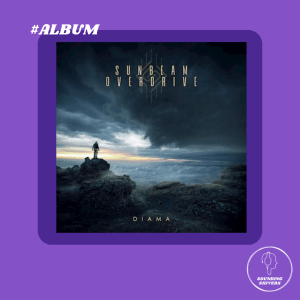
A while back we told you about Diama, the debut album from Marseille-based band Sunbeam Overdrive, which we absolutely loved! It’s already available via Tentacles Industries. Now it’s time to find out more about the project and the album in this interview with Tom, the band’s guitarist. He talks to us about the genesis of the band and this first release, as well as his musical favourites and Marseille’s scene.
Interview by Victor BRUNERIE
Can you start by introducing yourself and Sunbeam Overdrive?
Well, there’s a bit of a connection here, because Sunbeam Overdrive is a band that grew out of a project of mine. My name is Thomas, I’m the guitarist in the band and I’m from Marseille like the rest of the group. The group is made up of Karim on vocals, Laurent on drums and Bruno on bass. The band was born out of the stand-by of Tom Abrigan And The Shrunken Heads (TBSH in the rest of this article). It was guitar-based progressive rock, a bit like Whinery Dogs and that sort of thing, for example. But as we worked on the songs, the sound got harder and it really became band music. And then Sunbeam Overdrive was born, which was the name of a TBSH song about the speed records set at Bonneville Salt Lake at the turn of the last century.
When did you decide to start work on this first release?
It wasn’t obvious straight away, because when Sunbeam Overdrive was born, I was lead singer and there was another guitarist in the band. We played the band’s first gig at Euroblast 2019 and we were still playing TBSH’s music as well as three new songs that hypothetically resembled what the new band was going to become. But things were still in flux, because after that I didn’t really want to take on the role of singer and I wanted to stick more to my instrument. I’d met Karim several years ago and I thought he was an extraordinary singer. So I asked him to join the band as lead singer. He joined us and that’s when we really started thinking about the band’s sound. We started composing straight away because we were in the middle of the Covid period in 2020 and so a lot of decisions were made about the band’s sound at that point: like the tuning and things like that. When Karim arrived we started working on a lot of different lines and subjects and that’s how the group’s sound gradually took shape. It was a bit crazy, not really controlled. Karim and I were already good mates and we were going through a period of upheaval in our lives, and in the end we were feeling a lot of things that weren’t really under control. But all that led to the making of our first album. Could we talk about a pre-defined style, I don’t even know. We do what we like, that’s how we started out. Obviously what we do afterwards will be in that vein, but right now I can’t even tell you, for example, when we started composing this or that track because it was so instantaneous.
In fact, this album is a bit of a discovery of what you want to do with this new project?
Yes, absolutely! We came up with ideas that we thought were interesting. We didn’t want to do anything we’d actually heard before. There was no point in doing Soundgarden or Periphery or any of the other influences we had. But we thought that if they were mixed together, they were already a bit special. The melting pot between grunge, neo-progressive and djent is already something a bit special to mention. So all we can do now is try and do that and see what happens. We had more of a general aesthetic in mind. We didn’t think we had to do grunge or djent. It was really about the emotion of the moment. That’s why, in my opinion, the tracks don’t really sound the same either, but there’s a fairly coherent line. You’ve got slow, fast, rock’n’roll and more ethereal stuff. There was a sort of basic melodic system and then we did what we wanted in terms of rhythm and sound.
What did you want to tell with this first album?
If we talk about the lyrics, we’ll say that it’s as much autobiographical as it is about social events or philosophy, like on the track « Out Of Plato’s Cave ». We talk a bit about history, or we ask ourselves questions about history. On the one hand, there are the lyrics of the songs and their subjects, and on the other, musically speaking, we wanted to tell a different story. It’s an album that can be listened to at two speeds: either you get into the text and the music without thinking too much about it, or you embark on a journey and an ascent. That’s why we called it Diama, which is the name of a glacier on the north face of Nanga Parbat. For us, this album is a journey, and you can’t get too attached to the lyrics. It’s another way of reading the album. I’d even advise you to listen to this album in your car, at night, and then you’ll understand the second meaning of the album. As much as we could go into the details of the lyrics and the technique, there’s clearly a second, more spiritual reading which is our own journey, or at least the one we’d like to undertake in our lives.
What kind of feedback did you get when « Out Of Plato’s Cave », the first single from the album, was released?
It was very well received. Then something happened, and I’ve never really talked about it. In fact, I had my first metal band years ago, Sonny Red, at the end of the 90s. To give you an idea, we played at the first Hellfest! And in fact, the people who knew TBSH and then discovered Sunbeam Overdrive were people who were already interested in what I was doing in the past and some of them had already heard Sonny Red’s music. Everyone in Sunbeam has heard what this old band had to become. So even though TBSH and Sunbeam are two fundamentally different types of music, in the end when you put the three projects together you hear similarities. So people weren’t particularly surprised by the music, apart from the slightly low tuning. There really is a common thread running through all these projects, and the people who follow them aren’t going to be all that surprised by this new group, they may be surprised by the details but not the form.
And now that the album has been released in its entirety, what kind of feedback have you had?
So far it’s been great! We’ve been very well received by everyone. So for the public there’s a certain affect. We don’t often go into detail and I like that. They want to let us know that they’ve discovered the band and that they think it’s great. And some people go into a bit more detail. As far as the media are concerned, we’ve had nothing but good feedback, except for one. We were surprised by some of the media who completely understood where we were coming from. Because this mix of alternative rock and modern metal seemed pretty fine to us. In any case, we’d eaten the album enough to realise that we didn’t know exactly where each style came together, that the mix was homogeneous. We said to ourselves that if people didn’t understand, we weren’t surprised, and in the end we got some very, very good reviews where people said that Diama is an album that you have to listen to in detail, because it’s in the detail that you’re going to understand that this is music that you really haven’t heard before. It’s not something common, even if at first glance it seems that way. When you listen to it several times, you tell yourself that if you go and listen to another album by another band and tell yourself that it’s similar, well actually it’s not so similar. We didn’t want people to think after listening to the album that they’d rather be listening to Alice In Chains, for example. And that’s what comes across, that we have a singularity and that people have seen that makes us very happy, and it’s very pleasant.
For the mastering of the album you worked with Bret Caldas-Lima, who has worked with the likes of Devin Townsend and Megadeth. As a band, how did you benefit from working with him?
Bret is someone we started talking to when the TBSH EP came out in 2018. It was very well received, and afterwards Bret came up to me and said: « Man, this is a great record! But the mastering is not that good. I was the one who did the mastering on my own at the time. We’d started chatting and becoming friends and he’d done some tests, which at the time weren’t exactly conclusive as far as the sound of TBSH was concerned. But I said to myself that if I was going to work on a resolutely modern sound, he’d be the one I’d like to work with, and it didn’t fail. When we made the album it was obvious that we had to work with him on the mastering. So I had a bit of trouble with the production of the album because it was done over a fairly long period of time and in three different places. And the last place was the worst place I’d ever worked in and it was very complicated to finish the prog there. And unfortunately, Bret was giving me back masterings that I listened to in that studio and I couldn’t decide whether they were cool or not. I’d have to go out to my car and get a mouthful. Bret’s a bit of a mastering star, but as we’re pretty intimate with him, we didn’t say wow, that’s incredible! We just thought it was really cool to work with him.
What are your plans following the release of this album?
Well, right now it’s about developing our booking and getting out on stage. We’ve come to realise that it’s complicated for up-and-coming bands to get on stage. We’re going to get down to work and try to develop that. There are a few small changes. Laurent, who was on drums, is leaving and so we’re joining Damien, who’s also a drummer in another project where I also play. And there’s a new energy with Damien. The rehearsals we’ve done together have been incredible, so we can’t wait to get up on stage!
You’re from Marseille, so how do you see the place of metal and rock locally, given that the city is better known for its rap and hip hop scene?
Yes, Marseille is known for its rap and hip hop scene, but the rock and metal scene has always been there and it’s quite important. Some of the best-known French metal bands come from here. I’m talking about Eths and Dagoba, for example. Now Landmvrks have arrived and they’ve got everyone in agreement. Yes, people talk more about Marseille as a city of hip hop, but in the end, if hip hop hadn’t been there, we’d be a leading city in the world of metal. For me, these are two fundamentally different things. Rap and hip hop here are legendary, but the metal scene is there and exists. We manage to put on concerts and bring people in. There’s a bit of a confusion between the fact that the town is a hip hop town and the fact that it’s not a rock town. There are a lot of bands making waves at the moment!
To finish off, which bands or artists have thrilled you recently?
I discovered Astrodeath on the radio three days ago. They’re a stoner band, but it goes way beyond that. They’re extraordinary. There’s also Sleep Token with their amazing new songs. And I’ve also discovered a solo project, The Dark Atom, who do djent/midicore. It’s very far-reaching and I love it, so I’d advise you to check it out as soon as possible!
Thank you for your answers!
Thank you!
Also to be read:
 Sounding Shivers