Après vous avoir parlé de leur nouvel EP, Mad In France, Victor a pu s’entretenir avec Antoine, guitariste du groupe Swarm. Dans cette interview vous en apprendrez plus sur la compo de cet EP et sur ces thèmes, sur le prochain album à venir ainsi que sur les coups de coeur musicaux d’Antoine.
Propos recueillis par Victor BRUNERIE
English version below
Alors Swarm, pour ceux qui ne vous connaissent pas, qui êtes-vous ?
Nous c’est Swarm, on est un groupe de groove thrash metal. On a sorti un premier album en 2017 qui s’appelle Division & Disharmonies et puis un deuxième album en 2019 qui s’appelle Anathema. Et là voilà, on vient de sortir notre EP qui s’appelle Mad in France.
L’album Anathema est sorti en 2019. Est ce que vous aviez eu un peu le temps de tourner avec cet album là ou ça s’est vite arrêté?
Ça s’est vite arrêté mais on a quand même eu le temps de faire une petite tournée avant. C’était déjà ça. Après c’est sûr que le Covid, malheureusement, il a un peu tué l’album dans l’œuf, à notre plus grand désespoir. Mais on a quand même fait quelques clips, une tournée française. Donc voilà, on a eu l’occasion de faire quelques trucs.
Quand avez vous commencé à travailler sur le nouvel EP Mad in France?
Bah du coup ça a été au début du premier confinement parce que on s’est vite retrouvé à avoir rien d’autre à faire très clairement. Donc on s’est dit bon ben voilà, l’album c’est compliqué, donc on va essayer de composer pour faire continuer à vivre le groupe. Donc du coup, on a composé plein de trucs, une petite vingtaine de morceaux. Donc c’est pour ça qu’on s’est retrouvé vite avec l’EP.
L’EP est donc le résultat de tout ce que vous avez fait pendant le confinement..
Ouais, alors c’est une partie de ce qu’on a fait, parce qu’en fait, en gros, pour t’expliquer ce qui s’est passé: on a composé une petite vingtaine de morceaux puis on en a enregistré quinze dans la même session au Studio ArtMusic avec Sébastien Camhi qui est l’ingé son avec qui on a fait l’album d’avant. Et donc on a enregistré tous ces morceaux-là, et on s’est rendu compte qu’on avait plein de morceaux qui nous plaisaient. On s’est dit bon, ben c’est quoi, on a quinze morceaux, donc ça peut faire un album et un EP. On en a parlé à Seb, il était chaud donc on a tout enregistré dans le temps imparti pour un album. Ensuite on a masterisé ça chez deux studios différents, donc Kohlkeller Studio pour l’EP et Jacob Hansen pour pour l’album. Donc l’EP est la première partie de ces sessions là.
Donc, en fait, cet EP, c’est comme une transition entre l’album qui a été un peu tuer dans l’œuf, comme tu le disais, et le prochain album qui du coup est déjà prêt? .
Bon, on peut le voir comme une transition. Après on a pas voulu faire un EP entre guillemets au rabais. Il y a des morceaux qu’on n’a utilisés ni sur l’EP ni sur l’album, et. le but, c’était quand même d’avoir un EP qui nous satisfaisait au niveau de la qualité. Et en fait, ce qui s’est passé, c’est que sur le deuxième album, Mat, le deuxième guitariste est arrivé pendant les sessions de compo, donc il a composé un peu mais pas tant que ça. Mais il a composé pas mal pendant le Covid, et moi d’habitude, je compose toujours une grosse dizaine de morceaux. Donc du coup, on s’est retrouvé avec plein de morceaux qui nous plaisaient, donc c’est pour ça qu’on a eu la liberté de faire ça. Et du coup sur l’EP il y a pas mal de morceaux à Mat notamment. Donc du coup, ça permet de faire un peu quelque chose où il y a des expériences un peu différentes, notamment le morceau punk. Et il y a un morceau composé aussi en sept cordes, ce qui est un truc qu’on fait pour la première fois aussi. On a fait pas mal de morceaux en français, enfin voilà quoi.
Est ce que le reste de ce que vous avez enregistré est plus proche de ce que vous faites habituellement?
Ouais, mais l y a deux ou trois petites choses qui ont changeant, dans le sens ou on a essayé de faire quelques morceaux un peu plus courts. On s’est rendu compte qu’on avait beaucoup de morceaux longs sur le deuxième album, notamment le premier morceau déjà faisait huit minutes et le dernier morceau en fait neuf et demi. Il y a quand même quelques morceaux longs sur l’album qui sera à venir, notamment le dernier morceau qui fait neuf minutes. On a fait des trucs un peu moins longs aussi, mais on a essayé quand même de simplifier certaines parties pour que ça soit plus facilement “comestible”. Mais on va dire que dans dans l’idée générale, il y a peut être un peu plus de contribution de Mat, l’autre guitariste, et puis il y a les contributions de notre nouveau bassiste Flo, qui a enregistré sur ces sessions. Donc lui, il a apporté des choses qu’on ne faisait pas trop avant, notamment pas mal de slap à la basse et ces choses là. Donc ouais, il y a quand même des choses qui ont évolué, mais ça reste sur la même lignée.
Est ce que tu peux me parler un peu des thèmes que vous avez voulu aborder?
Ben alors du coup, c’est un petit peu dans la lignée de ce qui avait déjà été fait sur Anathema au niveau des thèmes. Donc là, c’est plus, c’est plus axé sur le communautarisme et sur la solitude et ce qu’elle peut faire dégager chez les gens. Parce que dans l’idée générale de l’EP, à part dans le morceau punk qui parle de de quelque chose de différent, les autres parlent pas mal du fait que si tu te conformes pas, si tu te mets pas dans une case, en fait, tu as un peu de mal parfois à trouver ta place dans la société. Et parce que de plus en plus, on a le sentiment que les gens ont ce besoin d’appartenance là. Et dès que t’essayes de faire quelque chose, dès que tu n’as pas exactement la même vision de l’un ou de l’autre, et bah c’est vrai que tu te sens un petit peu seul quoi. Et notamment le morceau “White Line”, c’est la continuité de notre clip de l’album d’avant “Frontiers” qui parlait déjà de ça. Donc les deux ils parlent du fait que dans le métal et dans la musique en général, il y a ce côté là un petit peu où tu te retrouves un peu avec des barrières si tu ne fais pas un style très défini. C’est quelque chose qu’on expérimente semi régulièrement, où les gens qui parce qu’ils ne comprennent pas ce qu’on fait, ou parce que ça se conforme pas exactement à un sous genre, ça les rebute. Ha oui mais vous êtes trop hardcore pour faire du thrash, vous êtes trop thrash pour du hardcore, et cetera… Et voilà, ça parle un petit peu de ça, notamment “White Line, mais c’est l’idée générale de l’EP.
Quels retours avez vous eu sur Mad In France depuis sa sortie?
Bah écoute, jusqu’à présent on a eu des très bons retours, on a eu des bonnes critiques, donc on est on est content. Parce qu’on stressait un peu, parce que bon un EP, c’est ,même si nous on ne le voit pas forcément comme ça, parfois être vu comme un sous album. Nous on voulait pas ça non plus, tu vois, c’est parfois moins pris au sérieux. Et puis on a expérimenté avec des trucs qu’on fait pas d’habitude, donc on ne savait pas trop comment ça serait reçu de faire un morceau punk en français quand tu fais du groove thrash en anglais d’habitude, mais du coup ça va. Tout le monde n’a pas forcément compris, mais je comprends très bien que ça puisse un peu surprendre, mais dans l’ensemble, on a eu des très bons retours, donc personnellement, je suis content.
Quels sont vos projets pour les prochains mois?
Et bien là, on est en train de chercher des dates en ce moment, pour octobre, novembre, décembre. D’ailleurs, si jamais il y en a parmi votre lectorat qui voudraient nous booker, ça sera avec grand plaisir. Voilà, on est en pleine recherche de dates là, parce qu’on a envie de défendre un peu les morceaux de l’EP et puis les morceaux d’avant aussi en live.
Quelle est ta vision de ce que la scène française métal peut proposer? Comment tu vois la scène metal française actuellement?
La scène metal française? Eh bien, il y a deux choses. Il y a les groupes et il y a ce qu’il y a autour des groupes. Donc au niveau des groupes, il y a quand même pas mal de choses, il y a une certaine diversité, je trouve. Donc c’est quand même pas mal. Il y a des groupes un peu plus mélodiques type Scarlean qui commencent à émerger. D’un autre côté, t’as des groupes plus thrash ou death, notamment dans notre région avec Akiavel et Heart Attack qui font des trucs de fou. Après tu as Mass Hysteria et Gojira évidemment, qui sont énormes. Donc je trouve qu’il y a une bonne diversité et ce n’est pas forcément une période super évidente pour la musique live et les trucs un peu underground et tout. Et bah quand même, on se défend pas mal donc ça fait plaisir, même si ce n’est pas toujours évident pour tout le monde. Et puis à côté de ça, il y a les festivals, donc bon, il y a le Hellfest évidemment qui est énorme quoi. Mais il y a aussi pas mal de petits festivals à côté, il y a les festivals moyens, genre le Motocultor ou l’Xtreme Fest et tout, et il y a aussi des petits festivals en régions. Et ça c’est cool qu’il y en ait pas mal parce que c’est encore une fois pas évident de trouver des dates et de trouver son public quand un petit groupe. Donc c’est cool de voir plein d’initiatives comme ça.
Quels sont les groupes ou artistes qui t’ont fait vibrer dans la dernière année?
J’ai découvert un groupe qui s’appelle Messa, alors c’est du stoner pour le coup, c’est un espèce de stoner un peu un peu étrange, avec une jeune femme au chant qui a une voix magnifique. Donc ça c’est ce que j’ai vu dernièrement en live, qui m’a bien bien botté. C’est très très original, ça m’a vachement plu. Et sinon, il y a un groupe qui est passé à Nice l’année dernière qui s’appelle Cryptic Shift. C’est un groupe anglais qui fait du death metal, mais un peu du thrash death on va dire, avec des influences un peu à la Voïvod, Vector, tout ça donc avec des trucs un peu étranges mais qui sont vachement cool. J’avais vu ça à Nice et c’est vraiment un groupe qui m’a bien bien accroché.
Merci à toi pour toutes tes réponses et pour ta disponibilité!
Merci à toi
Merci à Roger et Where The Promo Is pour cette belle opportunité.
A lire aussi :
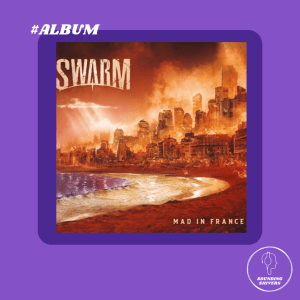
After talking to you about their new EP, Mad In France, Victor spoke to Antoine, guitarist with the band Swarm. In this interview you can find out more about the EP’s composition and themes, the forthcoming album and Antoine’s musical discoveries.
Interview done by Victor BRUNERIE
So, Swarm, for ou readers who do not know you, who are you ?
Yeah, absolutely. We’re Swarm, a groove thrash metal band. We released a first album in 2017 called Division & Disharmonies and then a second album in 2019 called Anathema. And now we’ve just released our EP, Mad in France.
The Anathema album came out in 2019. Did you have a bit of time to tour with that album, or did it come to a quick end?
It stopped pretty quickly, but we still had time to do a bit of touring beforehand. And that was that. After that, Covid, unfortunately, nipped the album in the bud a bit, much to our despair. But we still made a few videos and did a French tour. So there you have it, we had the opportunity to do a few things.
When did you start work on the new Mad in France EP?
Well, it was at the beginning of the first period of confinement because we quickly found ourselves with nothing else to do. So we thought, well, the album’s complicated, so we’re going to try and compose something to keep the band going. So we ended up writing a lot of stuff, about twenty songs. So that’s why we quickly ended up with the EP.
So the EP is the result of everything you did during the confinement?
Yeah, well, that’s part of what we did, because basically, to explain what happened: we composed about twenty tracks and then recorded fifteen of them in the same session at Studio ArtMusic with Sébastien Camhi, who’s the sound engineer we worked with on the previous album. So we recorded all those tracks and we realised we had a lot of tracks we liked. We thought, well, what the hell, we’ve got fifteen tracks, so it could make an album and an EP. We spoke to Seb about it and he was really keen, so we recorded everything in the time available for an album. Then we mastered it at two different studios, Kohlkeller Studio for the EP and Jacob Hansen for the album. So the EP is the first part of those sessions.
So, in fact, this EP is like a transition between the album that was a bit nipped in the bud, as you said, and the next album, which is already ready?
Well, you could see it as a transition. After that, we didn’t want to make an EP on the cheap. There are tracks that we didn’t use on either the EP or the album, and the aim was still to have an EP that satisfied us in terms of quality. And in fact, what happened was that on the second album, Mat, the second guitarist, arrived during the composition sessions, so he composed a bit but not that much. But he did write quite a lot during Covid, and I usually write about ten songs. So we ended up with a lot of tracks that we liked, so that’s why we had the freedom to do that. As a result, there are quite a few Mat tracks on the EP. So it allows us to experiment a bit with different things, particularly the punk track. And there’s also a track written in seven strings, which is something we’re doing for the first time too. We’ve also done quite a few songs in French.
Is the rest of what you’ve recorded closer to what you usually do?
Yeah, but there are a couple of things that have changed, in the sense that we’ve tried to make a few songs a bit shorter. We realised that we had a lot of long tracks on the second album, especially the first track was already eight minutes long and the last track is nine and a half. There are still a few longer tracks on the forthcoming album, particularly the last track which is nine minutes long. We’ve done some stuff that’s a bit less longer too, but we’ve still tried to simplify certain parts to make it more ‘edible’. But let’s just say that in the general idea, there’s maybe a bit more contribution from Mat, the other guitarist, and then there are the contributions of our new bassist Flo, who recorded on these sessions. So he brought in some things that we didn’t really do before, particularly a lot of slap on the bass and that sort of thing. So yeah, there are still some things that have evolved, but it’s all along the same lines.
Can you tell me a bit about the themes you wanted to tackle?
Well, it’s a bit in line with what we’ve already done on Anathema in terms of themes. But this time it’s more focused on communitarianism and loneliness and what it can bring out in people. Because in the general idea of the EP, apart from the punk track which talks about something different, the others talk quite a lot about the fact that if you don’t conform, if you don’t put yourself in a box, in fact, sometimes you have a bit of trouble finding your place in society. And because more and more, we have the feeling that people have this need to belong. And as soon as you try to do something, as soon as you don’t have exactly the same vision of one or the other, it’s true that you feel a little bit alone. The track ‘White Line’ in particular is a continuation of our video for the previous album, ‘Frontiers’, which was already about that. So both of them talk about the fact that in metal and in music in general, there’s this side where you find yourself a bit hampered if you don’t have a very defined style. It’s something we experiment with on a semi-regular basis, where people who don’t understand what we’re doing, or because it doesn’t exactly conform to a sub-genre, are put off by it. You’re too hardcore to do thrash, you’re too thrash to do hardcore, et cetera… And that’s what it’s all about, especially « White Line », but that’s the general idea of the EP.
What feedback have you had on Mad In France since its release?
Well, listen, so far we’ve had some really good feedback, we’ve had some good reviews, so we’re really happy. Because we were a bit stressed, because an EP, even if we don’t necessarily see it that way, can sometimes be seen as a sub-album. We didn’t want that either, you see, it’s sometimes less taken seriously. And then we experimented with stuff we don’t usually do, so we weren’t sure how it would be received to do a punk song in French when you’re usually doing thrash grooves in English, but it turned out OK. Not everyone understood it, but I can understand why it might come as a bit of a surprise, but on the whole we got some really good feedback, so personally I’m happy.
What are your plans for the coming months?
Well, we’re currently looking for dates for October, November and December. And if any of your readers would like to book us, we’d be delighted to do so. We’re in the middle of looking for dates right now, because we want to defend the tracks from the EP and the tracks from before that live.
What’s your vision of the French metal scene? How do you see the French metal scene at the moment?
The French metal scene? Well, there are two things. There are the bands and then there’s what’s going on around the bands. So as far as the bands are concerned, there’s quite a lot, there’s a certain diversity, I think. So it’s not bad. There are bands that are a bit more melodic, like Scarlean, who are starting to emerge. On the other hand, you’ve got more thrash or death bands, especially in our region with Akiavel and Heart Attack who are doing some crazy stuff. Then you’ve got Mass Hysteria and Gojira of course, who are huge. So I think there’s a good diversity and it’s not necessarily a great time for live music and underground stuff and all that. But we’re defending ourselves pretty well, so that’s good, even if it’s not always easy for everyone. And then there are the festivals, so of course Hellfest is huge. But there are also quite a few small festivals alongside it, there are medium-sized festivals like Motocultor or Xtreme Fest and so on, and there are also small festivals in the regions. And it’s cool that there are quite a few of them because, once again, it’s not easy to find dates and find an audience when you’re a small band. So it’s great to see lots of initiatives like that.
What bands or artists have thrilled you in the last year?
I discovered a band called Messa, so it’s stoner for a start, it’s a kind of stoner that’s a bit strange, with a young woman on vocals who has a magnificent voice. So that’s what I’ve been seeing live recently, and I’ve been really excited about it. It’s very, very original, and I really liked it. And then there’s a band who played in Nice last year called Cryptic Shift. They’re an English band who play death metal, but a bit thrash death we’ll call it, with influences a bit like Voïvod, Vector and all that, so with stuff that’s a bit strange but really cool. I saw them in Nice and they really grabbed me.
Thank you for all your answers and for your availability!
Thanks a lot!
Also to be read:
 Sounding Shivers