Avant les fêtes, nous vous parlions de Toutes Blessent, La Dernière Tue, le nouvel album d’Abduction. Pour en découvrir plus sur sa création, sur les influences de la formation, sur ses thématiques, ainsi que sur les artistes qui les font vibrer, nous avons pu échanger avec Guillaume Fleury, guitariste et fondateur du groupe francilien.
Interview par Victor BRUNERIE
English version below
Victor: Est ce que tu peux commencer par nous parler un peu du groupe et de son histoire?
Guillaume: J’ai lancé le groupe en 2006, l’impulsion ça a été la mort de Jon Nödtveidt le chanteur de Dissection, qui est mon groupe de métal extrême favori. Ca m’a beaucoup marqué et je me suis dit qu’il était temps de faire un truc artistique à mon niveau au lieu de me remettre ça à plus tard. Du coup je me suis mis à l’apprentissage de la guitare en autodidacte avec un ami de la fac à l’époque. Donc ça a commencé par bien maîtriser l’instrument puis ça s’est transformé en véritable groupe avec d’autres personnes. Il y a juste eu un changement de chanteur en cours de route, car Guillaume Roquette, qui est maintenant dans le groupe Hilde, était pas trop à l’aise avec le fait que je veuille du chant clair dans les morceaux. Il préférait chanter en chant extrême tout le temps. Il est parti mais on est resté en très bon termes. Du coup on a recruté notre actuel chanteur, François Blanc mais sinon le line up a jamais changé. C’est toujours Morgan Velly à la batterie, Matthieu Taverne à la basse, François au chant et moi à la guitare. On a publié notre première démo en 2010, puis notre premier album en 2016. Ca a pris du temps car comme je te disais on a appris sur le tas et il a fallu apprivoiser un paquet de choses. Et après on a enchainé les albums à peu près tous les deux ans et celui là est notre quatrième.
Victor: Je voulais revenir un peu sur l’album précédent, Jehanne, comment tu vois cette période là du groupe et comment avez vous vécu cet album là?
Guillaume: C’était un peu particulier car c’est sorti en plein milieu du premier confinement en 2020, on avait pas prévu ça du tout tu t’imagines bien. On a vite vu que ça éveillait l’intérêt, en particulier le sujet de Jeanne D’Arc. Les gens étaient intrigués d’avoir un album complet sur un sujet historique. En plus la figure historique de Jeanne D’Arc est très archétypale et parle à beaucoup de gens un peu partout dans le monde, et ça nous a surpris de voir autant d’intérêt pour ce genre de projet. On a eu des commandes d’un peu partout dans le monde et beaucoup de retours très positifs. Quand on a lancé ce projet on était pas persuadé que Jeanne intéressait encore grand monde à part nous et on a été agréablement surpris de voir que si. Je pense que la pochette a pas mal joué car elle est assez marquante. Et puis derrière on s’est mis à fond dans cet album là, c’est l’album le plus dur qu’on a jamais eu à enregistrer. Le nouveau, par exemple a été beaucoup plus facile à faire par rapport à Jehanne. Sur un album concept, tu dois faire beaucoup de recherches, lire beaucoup de livres et surtout raconter une histoire dans l’ordre chronologique. Tu peux pas t’amuser à déplacer les parties dans un autre morceau car ça marche mieux. Quand tu racontes la prise d’Orléans, qui est le deuxième morceau de l’album, faut que ça soit comme un petit film, faut qu’il y ait les moments de violence au bon endroit et les moments d’accalmies au bon endroit. C’est comme dans un livre ou un film, il faut que tu suives ton scénario. Et c’était passionnant à faire, on a vraiment adoré et on a même eu du mal à quitter l’univers. On va surement refaire des concepts à l’avenir mais on voulait pas le refaire de suite et devenir un groupe attendu pour ça. On s’est dit qu’on allait revenir à ce qu’on faisait sur A L’Heure Du Crépuscule, l’album précédent, un truc plus global avec toujours des références historiques et un propos plus libre.
Victor: Ce qui est rigolo, c’est que Eloy ont, cette année, clôturé leur trilogie d’albums sur Jeanne D’Arc dans un genre musical très différent. C’est intéressant comme parallèle que vous racontiez la même histoire a peu près au même moment.
Guillaume: J’adorerai rencontrer Frank Bornemann (chanteur et créateur de Eloy, ndlr) car je trouve qu’il est passionnant. Il a une passion Jeanne D’Arc que je reconnais car j’ai un peu la même. Il s’est vraiment mis à fond dans le sujet et a raconté l’histoire à sa manière avec une musique totalement différente puisque c’est du rock progressif. Et j’adore ce qu’ils ont fait, ils sont vraiment bons les albums. Et j’aime beaucoup le lire sur le sujet parce que j’aime beaucoup ses références et j’ai trouvé ça intéressant qu’un peu en même temps on fasse la même chose. J’ai vu qu’un groupe de black français dont j’ai oublié le nom là tout de suite a aussi utilisé Jeanne sur sa pochette. Alors je sais plus si c’est un concept entier, mais il me semble. Je vois que c’est un sujet qui intrigue pas mal de monde. C’est une figure assez universelle, tu as pas besoin d’être français pour t’intéresser à son histoire. C’est très théâtral et cinématographique tout en étant réellement arrivé, c’est ça qui est fascinant.
Victor: Quand avez vous commencer à travailler sur Toutes Blessent, La Dernière Tue?
Guillaume: Je me souviens pas vraiment car c’est beaucoup de travail en continu. Mais en général quand on sort un album on a déjà commencé à travailler sur le suivant, on a même déjà bien les grandes lignes. Par exemple le projet sur Jeanne ça faisait des années que je savais que j’allais le faire un jour et quand on a sorti A L’Heure Du Crépuscule je travaillais déjà sur Jehanne. Là c’est un peu différent, on avait tellement mis notre énergie dans Jehanne et on était un peu rincés. Et y’a eu 2-3 mois où au niveau créatif il s’est quasi rien passé. On a du s’y mettre après ça, on a commencé à rassembler des idées. Après sur celui là il n’y avait pas vraiment de ligne directrice vu que c’est pas un concept. Après j’aime pas qu’on refasse un album qui ressemble à ce qu’on a déjà fait, donc l’idée de celui là c’était d’exploiter les idées mélodiques fortes quand je les ai. Je voulais faire moins de morceaux à tiroir et vraiment me concentrer sur une mélodie forte quand j’en ai une. Ce qui fait que les morceaux sont plus directs et moins longs que ce qu’on faisait avant. Après ça s’est fait de manière assez similaire à nos albums précédents.
Victor: Justement, vu que cet album n’était pas un concept, vers quelles thématiques as-tu voulu aller dans ce nouvel album?
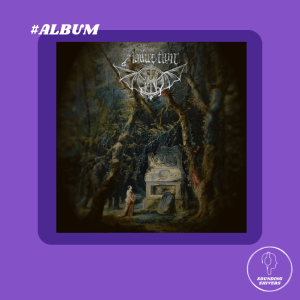
Guillaume: En fait dans notre musique il y a un concept global, celui du temps qui passe, de la mortalité et de l’inéluctabilité des choses. Et il y a aussi le rapport à l’Histoire, aux racines et même au futur. C’est des choses très universelles, c’est pas de la grande philosophie mais c’est des questions qu’on se pose tous. Après je voulais aussi une ambiance plus forestière, c’est pour ça que j’ai choisi ce visuel. Je voulais une ambiance un peu plus organique, et un peu plus atmosphérique peut être. C’est pour ça qu’on a travaillé la batterie pour qu’elle ait plus de réverbe, plus de résonnance. Ca c’est les grandes lignes. J’ai toujours besoin du visuel très tôt dans le processus, ça m’aide à structurer mes idées. Donc là il y a eu un moment où j’en avait vraiment besoin, et une fois que j’ai arrêté le visuel que tu as là (La Promenade Solitaire de Hubert Robert, ndlr) ça m’a débloqué plein de choses pour structurer et faire un album homogène. Et après pour faire très rapide, c’est souvent l’humeur du moment qui dicte les textes et parfois la musique. On fait toujours comme ça avec Matthieu qui écrit tout les textes. Sur celui là j’en ai écrit un mais le reste vient de lui.
Les thématiques y’a toujours des liens avec l’histoire de France. Sur « Disparus de Leur Vivant » on a parlé du retour des soldats après 14-18 et la manière dont ils arrivent directement dans un nouveau monde qui est celui des Années Folles et des usines. On a un morceau, « Contre Les Fers Du Ciel », qui est un hommage à Cyrano De Bergerac. Donc là c’est vraiment l’histoire telle que racontée par Edmond Rostand. « Carnets Sur Récifs » c’est Matthieu qui est très intéressé par les découvertes des grands explorateurs et les histoires un peu tragiques des avions de l’aéropostale qui s’abiment dans les glaces. Le point commun de toute façon c’est qu’il y a un côté très romantique à toutes ses histoires. On est très intéressés par les rapports humains, les rapports sociaux. Par exemple quand on fait Jehanne, on ne prétend pas donner des leçons d’Histoire aux gens, on est plutôt à se demander comment elle à vécu, ce qu’elle ressentait. On s’est demandé comment tu vis une épopée comme celle là et comment le ressentent les gens autour d’elle.
Et par exemple pour le morceau sur 14-18, on vit à une époque où on à la chance d’avoir les archives de l’époque, tous les carnets avec les ordres de marche. Et quand tu sais où étaient tes ancêtres, comme mon arrière grand oncle par exemple, ben c’est hyper intéressant à creuser. J’ai retrouvé les carnets et je sais où lui et son unité étaient tout au long de la guerre, où sont morts ceux qui sont morts… C’est ce qui m’intéresse le plus. J’essaie de comprendre ce qu’ils ressentaient et j’invite ceux qui liront à essayer de faire de même s’il en ont envie. C’est hyper simple, surtout depuis les célébrations du centenaire, ils ont numérisé toutes les archives. J’ai pu retracer tout son parcours jusqu’à sa mort dans un bombardement puis les hommages qu’il y a eu derrière. Ce qui m’a le plus marqué dans les carnets c’est que c’est des choses très froides, très administratives. L’officier écrit juste « tel jour on fait ça, tel jour on fait ci, on a bivouaqué ici… » mais il donne pas trop ses émotions. Et le jour où mon arrière grand oncle meurt avec d’autre camarades tu sens dans les écrits que y’a l’émotion qui prend le pas sur l’officier et c’est ça qui m’intéresse. Et par exemple pour moi le livre Ceux de 14 de Maurice Genevois c’est un exemple admirable de ça. Il raconte beaucoup l’aspect psychologique du truc. Comment les soldats se blindent, comment ils arrivent à se convaincre que ce qu’ils font à un sens et comment ils essaient de ne pas avoir trop de compassion pour leurs ennemis. J’espère que c’était pas trop long!
Victor : Pas du tout, merci pour cette très belle réponse! Votre musique mélange des sons qu’on a pas l’habitude d’entendre ensemble. Ce qui m’a marqué en écoutant l’album ce sont les passages acoustiques qui se mêlent aux passages très black métal. Comment vous construisez ce pont entre deux types de musiques qu’on voit rarement mis l’un avec l’autre?
Guillaume: C’es très instinctif en fait. On aime pas se limiter et se dire que le black métal c’est telle ou telle règle comme être à 220 bpm tout le temps. Tu disais juste avant l’interview que sur votre média vous ne vous limitiez pas sur les genres musicaux parce que plusieurs choses peuvent vous parler et ben nous c’est un peu pareil. On ne veut pas se limiter comme si il y avait un code du black métal qui interdirait les passages acoustiques ou de mettre du chant clair un peu inspiré de la chanson française. On veut vraiment avoir un totale liberté sur ce qu’on fait, et du coup ça devient instinctif. Si on sent qu’il faut un plan acoustique à un endroit il va venir de lui même et si ça marche on le laisse. On met un point d’honneur à ne se mettre aucune limite car on trouve que c’est ça qui rend la musique intéressante.
Victor : A la fin de l’album vous avez fait une reprise du morceau « Allan » de Mylène Farmer et en regardant le clip on sent un véritable hommage au travail de Laurent Boutonnat, l’ancien réalisateur des clips de Mylène. Comment s’est fait le choix du morceau et comment s’est passé le travail sur le clip?
Guillaume: En fait le choix du morceau s’est imposé à moi car c’est mon titre préféré de Mylène Farmer. Si je devais faire un top trois de mes morceaux préférés y’aurait « Allan » en 1 et « Je t’aime Mélancolie » et « Tristana » juste derrière. Ces deux autres morceaux là marcheraient à mon avis aussi très bien en black métal, tout comme des morceaux comme « Avant Que L’Ombre ». D’ailleurs celui là ferait une très belle symphonie black métal, et je me suis dit que c’est un truc que je ferais surement un jour. J’aime pas les reprises au départ, surtout quand c’est un groupe un peu dans le même style que toi. Reprendre un groupe qui a déjà des guitares et des batteries fortes c’est pas passionnant. Je trouve ça plus intéressant de mélanger deux univers qui à priori n’ont aucune connexion. Je ne sais pas comment on peut qualifier la musique que Mylène fait sur Ainsi Soit Je mais on pourrait dire variété synth pop. Et je trouvais que ça dans notre style ça pouvait apporter quelque chose. Et de toute façon si on me demandait mon artiste ultime je répondrais Mylène Farmer, vu qu’elle m’accompagne depuis toujours et que je suis très sensible à son univers qui est hyper compatible avec le métal je trouve. Y’a une morbidité, y’a des questionnements sur la morts assez sombres. Quand je regardais ses clips gamins je trouvais que ça détonnait avec le reste, y’avait une ambiance gothique folle qui s’en dégageait. Et je pense que elle et moi on doit avoir les mêmes références littéraires, les mêmes intérêts et les mêmes questionnements, du coup je me connecte très facilement à son univers.
Et pour le clip, je suis très admiratif du travail de Laurent Boutonnat. J’ai pas du tout la prétention de faire des clips à son niveau, et de toute façon là c’était un tout petit, minuscule budget. On a fait ça nous même, j’avais jamais tenu une caméra avant. La seule professionnelle c’est Pauline, notre photographe qui a aussi été notre monteuse sur le clip. Elle m’a aidé pour les éclairages et a fait le montage sous ma supervision. Et côté visuel on voulait rendre hommage au vieux cinéma français des années 30-40 dont je suis très fan. Mes réalisateurs préférés c’est des gens comme Marcel Carné ou Henri-Georges Clouzot. Je voulais pas que ça soit un pastiche, je voulais pas que l’image ça soit le vieux grain tout crade avec des points qui apparaissent. Mais je voulais ce mélange entre les deux, qu’on voit que c’est fait avec une caméra moderne mais avec cet hommage à l’ancien avec le 4/3 et le noir et blanc. On a travaillé un beau noir et blanc sans le pervertir et le salir pour faire comme s’il était très vieux. Et évidemment on a mis beaucoup de références à Mylène vu que ce morceau est avant tout un hommage à son travail et à celui de Laurent Boutonnat. On a vraiment pris beaucoup de plaisir à faire ça. On était pendant deux jours à 6-7 en voulant rendre un hommage aussi vibrant que possible à l’original, tout ça en étant tous amateurs dedans.
Victor: Ca se ressent vraiment autant dans l’écoute du morceau que dans le clip!
Guillaume: Merci beaucoup! C’est l’essentiel pour nous. Le clip a d’ailleurs été partagé sur le site mylene.net, sachant que Mylène Farmer n’a pas de site officiel, mais c’est la plus grosse page faite par des fans. On a eu énormément de réponses positives de gens qui ont trouvé le clip très beau et qui ont compris la référence et qui nous ont encouragés. Et je disais tout à l’heure qu’on a fait le pont entre deux univers, et certains ont découvert le black métal avec le clip et ont trouvé ça inaudible. Tu sens que la double pédale ça leur a transpercé les côtes, ou ils trouvaient le chant horrible. Tu finis par oublier quand tu écoutes du métal depuis des années à quel point c’est hermétique pour beaucoup de gens, et ça nous l’a rappelé. Mais ce qui nous a plu c’est que beaucoup de fans ont compris l’hommage et qu’on faisait ça avec un vrai respect de l’artiste et de son univers et une vraie passion pour son travail.
Victor: Pour terminer est ce que tu peux nous parler des artistes qui te font vibrer ces derniers mois?
Guillaume: Alors déjà l’album de métal qui m’a littéralement retourné cette année c’est Black Medium Current de Dødheimsgard. Je suis fan du groupe du groupe depuis des années, mais je trouve à chaque album qu’ils arrivent à pousser les limites à chaque fois et je pense que c’est leur meilleur album. Il y a tout ce que le groupe porte en lui dans ce disque, c’est leur disque le plus mélancolique et je suis très sensible à la mélancolie.
Après mon plus gros coup de cœur de l’année c’est Taylor Swift. Je suis journaliste aussi et en faisant une interview du guitariste de Blackstone Cherry je lui ai demandé ce qu’il écoute et il m’a dit « je suis à fond sur la musique de Taylor Swift, son dernier album Midnights est top… ». De mon côté j’adore la pop avec des artistes comme Miley Cyrus ou Dua Lipa. Et il m’a dit qu’avec le groupe avaient vu Taylor en live cette année et que c’était le meilleur concert qu’il avait fait de sa vie. J’ai creusé et j’ai rattrapé toute sa discographie, et je trouve ce qu’elle fait incroyable. Elle a une façon d’écrire ses morceaux, ses textes, une prosodie et un phrasé hyper particulier que j’avais pas décelé au début. Je trouve ça exceptionnel. Je trouve que la scène pop actuel est d’un niveau exceptionnel, c’est de grande qualité.
Et sinon côté français y’a un nouveau groupe A/Oratos qui a sorti un morceau que je trouve incroyable, et qui a un album qui arrive (Ecclesia Gnostica, sortie le 19 janvier via Les Acteurs De L’Ombre). Dedans il y a le chanteur de Griffon dont j’adore le travail. Les américains de Wayfarer ont aussi sorti un album que j’ai adoré cette année. American Gothic est un mélange de rock occulte avec des ambiances western et du black métal. C’est les mecs de Stormkeep qui mélangent aussi le black et la dungeon synth, un truc entre Rhapsody et Dissection et ça aussi c’est incroyable. Ca c’est les trucs qui me viennent spontanément à l’esprit et qui m’ont impressionné.
Victor: Un grand merci à toi pour tes réponses et pour ton temps. A très vite en concert je l’espère!
Guillaume: Merci à toi, et on va vraiment essayer de jouer live en 2024, on est en train de travailler là dessus!
Before the festive season, we told you about Toutes Blessent, La Dernière Tue, Abduction’s new album. To find out more about its creation, the band’s influences and themes, and the artists who inspire them, we spoke to Guillaume Fleury, guitarist and founder of the Paris-based group.
Interview by Victor BRUNERIE
Victor: Can you start by telling us a bit about the band and its history?
Guillaume: I started the band in 2006, the impetus was the death of Jon Nödtveidt the singer of Dissection, which is my favourite extreme metal band. It had a big impact on me and I thought it was time to do something artistic on my own instead of putting it off until later. So I started teaching myself guitar with a friend from university at the time. So it started with getting to grips with the instrument and then turned into a real group with other people. There was just one change of singer along the way, because Guillaume Roquette, who’s now in the band Hilde, wasn’t too comfortable with the fact that I wanted clean vocals in the songs. He preferred to sing extreme vocals all the time. He left but we stayed on very good terms. So we recruited our current singer, François Blanc, but otherwise the line-up never changed. It’s still Morgan Velly on drums, Matthieu Taverne on bass, François on vocals and myself on guitar. We released our first demo in 2010, then our first album in 2016. It took a long time because, as I said, we learned on the job and we had to get to grips with a lot of things. After that, we released albums about every two years and this is our fourth one.
Victor: I wanted to come back a bit to the previous album, Jehanne, how do you see that period of the band and how did you experience that album?
Guillaume: It was a bit special because it came out right in the middle of the first lockdown in 2020, which we hadn’t planned at all, as you can imagine. We quickly realised that there was a lot of interest, especially in the subject of Joan of Arc. People were intrigued to have a complete album on a historical subject. What’s more, the historical figure of Joan of Arc is very archetypal and speaks to a lot of people all over the world, so we were surprised to see so much interest in this kind of project. We’ve had reviews from all over the world and a lot of very positive feedback. When we launched this project we weren’t convinced that Joan was of interest to anyone but ourselves and we’ve been pleasantly surprised to see that she is. I think the cover had a lot to do with it because it’s quite striking. It’s the hardest album we’ve ever had to record. The new one, for example, was a lot easier to make than Jehanne. On a concept album, you have to do a lot of research, read a lot of books and above all tell a story in chronological order. You can’t have fun moving parts around in another track because that works better. When you tell the story of the taking of Orleans, which is the second track on the album, it has to be like a little film, there have to be moments of violence in the right place and moments of calm in the right place. It’s like a book or a film, you have to follow your script. We really loved it and even found it hard to leave the universe. We’ll probably come up with some new concepts in the future, but we didn’t want to do it all over again and become a band that was expected to do it. We thought we’d go back to what we were doing on A L’Heure Du Crépuscule, the previous album, a more global thing with historical references and a freer approach.
Victor: The funny thing is that this year Eloy have brought their trilogy of albums about Joan of Arc to a close in a very different musical genre. It’s an interesting parallel that you’re telling the same story at roughly the same time.
Guillaume: I’d love to meet Frank Bornemann (singer and creator of Eloy, editor’s note) because I find him fascinating. He has a passion for Joan of Arc that I recognise because I have a bit of the same thing. He’s really got into the subject and has told the story in his own way, using totally different music, because it’s progressive rock. And I love what they’ve done, the albums are really good. And I love reading about it because I really like his references and I found it interesting that we were doing the same thing at the same time. I saw that a French black band whose name I’ve forgotten right now also used Joan on their cover. So I don’t know if it’s a whole concept, but it seems to me. I can see that it’s a subject that intrigues a lot of people. She’s a pretty universal figure, you don’t have to be French to be interested in her story. It’s very theatrical and cinematographic, while at the same time really happening, and that’s what makes it so fascinating.
Victor: When did you start working on Toutes Blessent, La Dernière Tue?
Guillaume: I don’t really remember because it’s a lot of continuous work. But generally when we release an album we’ve already started working on the next one, we’ve even already got the broad outlines. For example, I’d known I was going to do the Joan project for years and when we released A L’Heure Du Crépuscule I was already working on Jehanne. We’d put so much energy into Jehanne that we were a bit burnt out. And there were 2-3 months where virtually nothing happened creatively. We had to get down to work after that and start putting ideas together. But on this one there wasn’t really a guiding principle, because it’s not a concept. I don’t like the idea of making another album that sounds like something we’ve already done, so the idea with this one was to exploit the strong melodic ideas when I had them. I wanted to do fewer drawer tracks and really concentrate on a strong melody when I have one. As a result, the songs are more direct and shorter than what we used to do. After that, the process was pretty much the same as on our previous albums.
Victor: Given that this album wasn’t a concept, what themes did you want to focus on in this new album?
Guillaume: In fact, in our music there is a global concept, that of time passing, mortality and the inevitability of things. And there’s also the relationship with history, roots and even the future. It’s not great philosophy, but these are questions we all ask ourselves. After that, I also wanted a more forest-like atmosphere, which is why I chose this visual. I wanted an atmosphere that was a bit more organic, and a bit more atmospheric perhaps. That’s why we worked on the drums so they’d have more reverb, more resonance. Those are the broad outlines. I always need visuals very early on in the process, they help me structure my ideas. So there was a moment when I really needed it, and once I’d stopped using the visual you’ve got there (Hubert Robert‘s La Promenade Solitaire, editor’s note) it unlocked a lot of things for me to structure and make a homogeneous album. And then, to cut to the chase, it’s often the mood of the moment that dictates the lyrics and sometimes the music. That’s the way it’s always done with Matthieu, who writes all the lyrics. I wrote one of the lyrics on this one, but the rest came from him.
The themes are always linked to French history. On « Disparus de Leur Vivant » we talked about the return of the soldiers after World War I and the way they came straight into a new world, that of the Roaring Twenties and the factories. There’s also a song called « Contre Les Fers Du Ciel », which is a tribute to Cyrano De Bergerac. So that’s really the story as told by Edmond Rostand. « Carnets Sur Récifs » is about Matthieu interest in the discoveries of the great explorers and the somewhat tragic stories of the airmail planes that crashed in the ice. What we all have in common is that there’s a very romantic side to all his stories. We’re very interested in human and social relationships. For example, when we did Jehanne, we didn’t set out to give people history lessons, but rather to ask ourselves how she lived, what she felt. We asked ourselves how you experience an epic like that and how the people around her feel.
And for example, for the piece on WWI, we live in an era when we’re lucky enough to have the archives of the time, all the notebooks with marching orders. And when you know where your ancestors were, like my great-great uncle for example, well that’s really interesting to dig into. I’ve found the notebooks and I know where he and his unit were throughout the war, where those who died died… That’s what interests me most. I’m trying to understand how they felt and I invite those who read this to try and do the same if they feel like it. It’s really easy, especially since the centenary celebrations, when they digitised all the archives. I’ve been able to retrace his entire career right up to his death in a bombing and the tributes that followed. What struck me most about the notebooks is that they are very cold, very administrative. The officer just writes « such and such a day we did this, such and such a day we did that, we bivouacked here… » but he doesn’t really give his emotions. And on the day my great-great uncle died with other comrades, you can feel in the writings that the emotion takes precedence over the officer and that’s what interests me. And for example, for me the book Ceux de 14 (Those of ’14) by Maurice Genevois is an admirable example of that. It tells a lot about the psychological aspect of things. How the soldiers armoured themselves, how they managed to convince themselves that what they were doing made sense and how they tried not to have too much compassion for their enemies. I hope it wasn’t too long!
Victor: Not at all, thank you for that wonderful reply! Your music mixes sounds that we’re not used to hearing together. What struck me when I listened to the album were the acoustic passages that blend with the very black metal passages. How do you build this bridge between two types of music that we rarely see put together?
Guillaume: It’s very instinctive actually. We don’t like to limit ourselves and tell ourselves that black metal is this or that rule like being at 220 bpm all the time. You said just before the interview that on your media you don’t limit yourself on musical genres because several things can speak to you and well it’s a bit the same for us. We don’t want to limit ourselves as if there were a black metal code that would forbid acoustic passages or clear vocals inspired by French chanson. We really want to have total freedom over what we do, and so it becomes instinctive. If we feel we need an acoustic section in one place, it’ll come on its own and if it works, we leave it in. We make it a point of honour not to put any limits on ourselves because we think that’s what makes the music interesting.
Victor: At the end of the album you do a cover of Mylène Farmer’s « Allan » and the video clip is a real tribute to the work of Laurent Boutonnat, Mylène’s former video director. How did you go about choosing the song and working on the video?
Guillaume: Actually, the choice of the song came to me because it’s my favourite Mylène Farmer song. If I had to make a top three of my favourite songs, I’d have « Allan » at number 1 and « Je t’Aime Mélancolie » and « Tristana » just behind. In my opinion, these other two tracks would also work very well in black metal, as would tracks like « Avant Que L’Ombre ». In fact, that one would make a beautiful black metal symphony, and I thought it was something I’d probably do one day. I don’t like covers in the first place, especially when it’s a band that’s a bit in the same style as you. Covering a band that already has strong guitars and drums isn’t very exciting. I think it’s more interesting to mix two worlds that, on the face of it, have no connection. I don’t know what you’d call the music Mylène makes on Ainsi Soit Je, but you could call it synth pop. And I thought that, in our style, it could bring something to the table. And in any case, if someone asked me who my ultimate artist was, I’d say Mylène Farmer, because she’s always been with me and I’m very sensitive to her world, which I think is very compatible with metal. There’s a morbidity about it, there’s some pretty dark questions about death. When I watched her music videos as a kid, I thought they stood out from the rest, they had this crazy gothic vibe about them. And I think that she and I must have the same literary references, the same interests and the same questions, so I connect very easily to her world.
As for the video clip, I really admire Laurent Boutonnat‘s work. I wouldn’t presume to make music videos on his level, and in any case it was a very small, tiny budget. We did it ourselves, I’d never held a camera before. The only professional was Pauline, our photographer, who was also our editor on the video. She helped me with the lighting and did the editing under my supervision. And on the visual side we wanted to pay tribute to the old French cinema of the 30s and 40s, which I’m a big fan of. My favourite directors are people like Marcel Carné and Henri-Georges Clouzot. I didn’t want it to be a pastiche, I didn’t want the image to be all dirty old grain with dots appearing. But I did want this mix between the two, so that you could see that it was made with a modern camera but with this homage to the old with the 4:3 and the black and white. We worked with a beautiful black and white without perverting it and dirtying it up to make it look very old. And of course we made a lot of references to Mylène, because this track is above all a tribute to her work and that of Laurent Boutonnat. We really had a lot of fun doing it. We spent two days with 6-7 of us trying to pay as vibrant a tribute as possible to the original, and we were all amateurs at it.
Victor: You can really feel it both when you listen to the track and in the video!
Guillaume: Thank you very much! That’s the most important thing for us. The clip was also shared on the mylene.net website, bearing in mind that Mylène Farmer doesn’t have an official website, but it’s the biggest page created by fans. We’ve had a lot of positive responses from people who thought the clip was really beautiful, who understood the reference and who encouraged us. And I was saying earlier that we’ve bridged two worlds, and some people discovered black metal with the video and found it inaudible. You can feel that the double pedal has pierced their ribs, or that the vocals are horrible. You end up forgetting when you’ve been listening to metal for years just how impenetrable it is for a lot of people, and this reminded us of that. But what we liked was that a lot of fans understood the tribute and that we were doing it with a real respect for the artist and her world and a real passion for her work.
Victor: Finally, can you tell us about the artists gave you shivers over the last few months?
Guillaume: So already the metal album that literally turned me around this year is Black Medium Current by Dødheimsgard. I’ve been a fan of the band for years, but with each album I find that they manage to push the boundaries every time and I think this is their best album. It’s got everything the band has in it, it’s their most melancholy record and I’m very sensitive to melancholy.
After that, my biggest music crush of the year is Taylor Swift. I’m a journalist too and when I was interviewing the guitarist of Blackstone Cherry I asked him what he listens to and he said « I’m really into Taylor Swift‘s music, her latest album Midnights is great… ». As for me, I love pop music with artists like Miley Cyrus and Dua Lipa. And he told me that he and the band had seen Taylor live this year and that it was the best concert he’d ever done. I dug around and caught up with her entire discography, and I think what she’s doing is incredible. She has a way of writing her songs, her lyrics, a very particular prosody and phrasing that I hadn’t noticed at first. I think it’s exceptional what she is doing. I think the current pop scene is at an exceptional level, it’s of the highest quality.
And on the French side, there’s a new band, A/Oratos, who have released a track I think is incredible, and who have an album coming out (Ecclesia Gnostica, out on the 19th of January via Les Acteurs De L’Ombre). There’s also the singer from Griffon in the band, whose work I adore. The Americans from Wayfarer also released an album that I loved this year. American Gothic is a mix of occult rock, western ambience and black metal. The guys from Stormkeep also mix black and dungeon synth, something between Rhapsody and Dissection, and that’s incredible too. Those are the things that come spontaneously to mind and that impressed me.
Victor: Many thanks for your answers and for your time. I hope to see you live very soon!
Guillaume: Thank you, and we’re really going to try and play live in 2024, we’re working on it!
A lire aussi / Also to be read :
 Sounding Shivers