Le 7 novembre prochain, Maudits dévoileront In Situ, leur troisième album, via Klonosphere. Formé en 2019, le projet instrumental post-metal devenu quartet poursuit son exploration sonore avec une œuvre à la fois spontanée, cinématographique et audacieuse. Entre compositions éclairs, enregistrement en extérieur et incursions vocales inédites, In Situ confirme que Maudits ne cesse de se réinventer, et c’est bien une raison pour laquelle on les adore !
par Marye Davenne
English version below
Dès les premières notes de « Leftovers », In Situ nous enveloppe dans une atmosphère contemplative. Le violoncelle, désormais pleinement intégré au groupe, se fait entendre dès l’ouverture, ajoutant une profondeur émotionnelle immédiate. La montée en intensité est progressive, presque cinématographique, rappelant les envolées du groupe EF. Les guitares, incisives et puissantes, sculptent un paysage sonore dense, avant de s’éteindre dans une douceur inattendue, comme un souffle retenu. Avec « Fall Over », Maudits nous plonge dans une ambiance plus sombre, presque doom. On se retrouve dans un lieu mystérieux, où les samples cristallins en arrière-plan créent une tension subtile. Puis, à deux tiers du morceau, tout s’accélère : une déferlante sonore s’abat, comme un combat intérieur qui éclate. C’est brutal, organique, et parfaitement maîtrisé.
Le morceau « In Situ », qui donne son nom à l’album, est une parenthèse suspendue. Enregistré en extérieur, on y entend le chant des oiseaux, une guitare mélancolique et un violoncelle délicat. Ce moment de grâce, tout en finesse, incarne l’approche spontanée du groupe sur cet album : capter l’instant, sans artifice. Avec « Roads », Maudits ose pour la première fois le chant, en reprenant le classique de Portishead. Pour cela, ils invitent Mayline Gautié (du groupe Lün) qui s’intègre avec une justesse bouleversante à l’univers du groupe. C’est une relecture sensible, respectueuse, mais aussi audacieuse, qui ouvre une nouvelle porte dans leur discographie.
« Précipice Part III » s’inscrit dans la continuité des deux premiers volets présents sur l’album précédent du même titre. Ce lien avec l’opus précédent est renforcé par le trèfle à quatre feuilles, motif récurrent sur les pochettes, dont celle ci est signé Guillaume Ringaud (qui avait déjà signé la pochette de leur Split avec Saar). Le morceau débute avec des sonorités orientales, notamment dans le jeu de batterie, avant de basculer dans une mélancolie profonde. C’est un morceau à fermer les yeux, à ressentir pleinement. Une pièce splendide, qui incarne tout ce que le post-rock peut offrir de plus émotionnel et immersif. « Carré d’As », avec Olivier Lacroix au chant (Erlen Meyer, Novembre), surprend par son ambiance inquiétante et son rythme trip-hop. On ne s’y attend pas, et c’est justement ce qui fait la force de Maudits : leur capacité à tenter, à explorer. Le morceau nous fait étonnamment penser à Fange, mais sans le chant hurlé omniprésent. Ici, le chant est plutôt parlé, jusqu’à un breakdown plus agressif qui vient ponctuer le morceau sans en dénaturer l’équilibre.
Enfin, « Lev-Ken » revisite deux titres issus du split avec SaaR en 2021 : « Loved » et « Breken ». En huit minutes, Maudits réinventent ces fragments sous une nouvelle lumière, toujours accompagné de Yann Desti et Boris Patchinsky (Parlor / Saar). Le morceau commence comme un titre post-rock classique, puis glisse vers une inquiétude sourde à mi-parcours. Les guitares deviennent furieuses, les distorsions s’intensifient, et l’on se retrouve pris dans une rythmique entêtante, comme une bataille intérieure. Puis tout retombe, laissant place à une forme de paix troublée.
Avec In Situ, Maudits signent un album riche, innovant et profondément émotionnel. Le groupe continue de tracer sa propre voie, refusant les étiquettes, et explorant des territoires sonores toujours plus vastes. L’ajout du chant, les compositions spontanées, les textures variées : tout concourt à faire de cet opus une réussite totale. On est heureux et fiers de les compter dans notre paysage sonore français. Bravo !
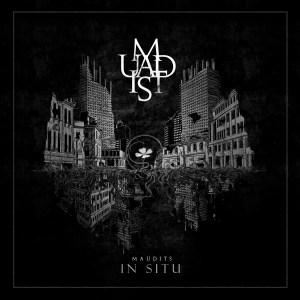
Tracklist :
- Leftovers
- Fall over
- In situ
- Roads
- Précipice part III
- Carré d’as
- Lev-ken
On November 7th, Maudits will release In Situ, their third album, via Klonosphere. Formed in 2019, the instrumental post-metal project, now a quartet, continues its sonic exploration with a work that is spontaneous, cinematic, and daring. Between lightning-fast compositions, outdoor recordings, and unprecedented vocal incursions, In Situ confirms that Maudits never ceases to reinvent itself, and that’s one reason why we love them!
From the very first notes of “Leftovers,” In Situ envelops us in a contemplative atmosphere. The cello, now fully integrated into the band, can be heard from the opening bars, adding immediate emotional depth. The intensity builds gradually, almost cinematically, reminiscent of the soaring sounds of the band EF. The incisive and powerful guitars sculpt a dense soundscape before fading away with unexpected softness, like a held breath. With “Fall Over,” Maudits plunges us into a darker, almost doom-like atmosphere. We find ourselves in a mysterious place, where crystalline samples in the background create a subtle tension. Then, two-thirds of the way through the song, everything accelerates: a wall of sound crashes down, like an inner struggle erupting. It’s brutal, organic, and perfectly controlled.
The track “In Situ,” which gives the album its name, is a suspended interlude. Recorded outdoors, it features birdsong, a melancholic guitar, and a delicate cello. This moment of grace, full of finesse, embodies the band’s spontaneous approach on this album: capturing the moment, without artifice. With “Roads,” Maudits ventures into vocals for the first time, covering the Portishead classic. To do so, they invited Mayline Gautié (from the band Lün) to join them, and she fits into the band’s universe with moving accuracy. It’s a sensitive, respectful, but also daring reinterpretation that opens a new door in their discography.
“Précipice Part III” follows on from the first two parts featured on the previous album of the same name. This link with the previous opus is reinforced by the four-leaf clover, a recurring motif on the album covers, including this one designed by Guillaume Ringaud (who also designed the cover for their split album with Saar). The track begins with oriental sounds, particularly in the drumming, before shifting into a deep melancholy. It’s a track to close your eyes to, to feel fully. It’s a splendid piece that embodies everything that post-rock has to offer in terms of emotion and immersion. “Carré d’As,” featuring Olivier Lacroix on vocals (Erlen Meyer, Novembre), surprises with its disturbing atmosphere and trip-hop rhythm. It’s unexpected, and that’s precisely what makes Maudits so powerful: their ability to experiment and explore. The track is surprisingly reminiscent of Fange, but without the omnipresent screaming vocals. Here, the vocals are more spoken, until a more aggressive breakdown punctuates the track without distorting its balance.
Finally, “Lev-Ken” revisits two tracks from the 2021 split with SaaR: ‘Loved’ and “Breken.” In eight minutes, Maudits reinvent these fragments in a new light, still accompanied by Yann Desti and Boris Patchinsky (Parlor/Saar). The track begins like a classic post-rock song, then slips into a dull unease halfway through. The guitars become furious, the distortions intensify, and we find ourselves caught up in a heady rhythm, like an inner battle. Then everything falls back into place, giving way to a kind of troubled peace.
With In Situ, Maudits have created a rich, innovative, and deeply emotional album. The band continues to forge its own path, refusing labels and exploring ever-wider sonic territories. The addition of vocals, spontaneous compositions, and varied textures all contribute to making this opus a total success. We are happy and proud to count them among our French soundscape. Bravo!
 Sounding Shivers