À l’aube de la sortie de leur album éponyme et de leur release party à la Bulle Café le 27 février dernier, nous avons rencontré Naked Soft Men pour retracer leur parcours. De leurs débuts improvisés aux tournées à travers la France, l’Allemagne et l’Angleterre, le groupe revient sur une ascension portée par l’énergie brute du live et un besoin constant de rencontres. Ils évoquent aussi la création de leurs EP, leurs premières expériences en studio puis la conception d’un album façonné loin de la pression, entourés d’artistes et d’amis. Enfin, ils posent un regard lucide sur la scène lilloise, entre dynamisme, fragilités et volonté de faire perdurer des lieux essentiels à l’émergence de nouveaux projets.
par Marye Davenne et Victor Brunerie
Crédit photo : Marye Davenne
English version below
Marye : On va juste commencer par un peu le retour aux sources du groupe, vraiment le début, pour vous c’est 2022?
Paul : Oui, c’était il y a quatre ans.
Jonathan : Fin 2021, c’est ça, début 2022, on faisait nos premières scènes. En avril ou mai, un truc dans le genre?
Marye : Premières scènes, mais pas forcément première rencontre.
Paul : Bah on se connaissait très peu avec Flo. Je l’ai rencontré le jour de la première répète. Parce que Flo connaît John, ils ont fait une partie d’école sup ensemble. Donc j’ai rencontré John en sortie de Covid. En petit afterwork chez lui, enfin afterwork, j’ai bu des bières, on a fini 3 h du mat’ et on a monté le projet. Enfin, on a vite matché, on a fait un peu de musique ensemble. J’avais 2 / 3 instruments dans mon salon et lui aussi d’ailleurs, et c’est comme ça qu’on a commencé à discuter et très vite on s’est dit qu’on avait envie de faire la musique ensemble. Il avait déjà eu un projet à l’époque, moi j’avais fait de la musique, mais au lycée. Mon seul projet, c’est un projet de reprise des Beatles et de Oasis. Et du coup, on a décidé de lancer le projet le jour de la fête de la musique 2021. On assiste à un concert et des gens nous disent de faire de la musique et en fait, à la fin du concert, on est montés sur scène, on a emprunté les instruments et on a jammé pendant 40 min. Et la soirée continue en fait comme ça avec ce concert improvisé. Et les anciens qui nous avaient prêté leur matos, ils ont dit « mais c’est cool ce que vous faites ! Vous avez un groupe ? » et on a dit « non, mais on va en faire un ». Et en fait, du coup, c’est né comme ça en septembre. On a commencé, on s’est donné rendez-vous, on s’est rencardé on va dire après les grandes vacances et fin septembre, début octobre, on faisait notre première répète à 3, et ça marchait direct, je crois bien.
Victor : Vous avez fait pas mal de concerts à Lille, mais aussi à Paris, jusqu’en Allemagne, et tout ça en 2023. Qu’est-ce que ça a apporté au groupe justement de pouvoir faire des scènes un peu à plein d’endroits et très vite ?
Florian : On voulait faire de la scène de toute façon donc on a farmé un peu. Déjà notre premier concert c’était ici à la Bulle. De toute façon, on avait besoin de s’amuser à jouer, à créer en répète et on avait surtout besoin de tester nos morceaux en live quoi. On n’est pas trop du genre à préparer des enregistrements. En tout cas, on avait pas l’expérience de l’arrangement. Donc on voulait juste balancer nos morceaux et puis montrer ça, montrer ça aux copains et puis à tous les gens qui pouvaient être curieux.
Marye : Et du coup, la dynamique du live, c’est quelque chose d’hyper important pour vous?
Jonathan : Ouais, c’est central. C’est ce qui a lancé le groupe et par rapport au fait qu’on ait bougé, je pense qu’il y a une volonté de connexion avec le monde de la musique. Très rapidement sur la scène locale, les gens nous ont dit « les gars, faites pas comme les autres groupes de Lille, ne vous enterrez pas ici, vous pourrez avoir une carrière locale, mais si vous voulez voir plus, bougez et revenez nous voir quand vous avez bougé ». Et ça a été un bon conseil. Et c’est Seb de La Bulle qui nous avait donné le premier ce conseil. Et en fait, très rapidement, notre VRP Paul qui a la tchatche facile a rencontré plein de monde.
Paul : Le truc, c’est qu’après le COVID, c’était devenu compliqué de trouver des dates en fait. Avant, les lieux allaient chercher les groupes, maintenant c’est les groupes qui se battent pour avoir une date. Et en fait, si t’attends juste de faire que tes dates chez toi, tu fais 3 concerts dans l’année et en fait tu fais rien. Et nous, on a une énergie musicale qui est on a une musique qu’il faut voir. En fait, je pense elle s’écoute en vrai, elle s’écoute de mieux en mieux puisqu’on est de plus en plus affutés, on va dire en studio, et cetera. Mais elle se voit surtout, elle se vit en live et du coup, en fait, on s’est dit si on fait bien sûr, on a commencé par des scènes lilloises, évidemment, mais on s’est vite dit qu’on fasse un bar de 50 personnes à Lille ou un bar de 30 personnes à Tours ou Mulhouse, c’est la même chose. On a réussi à s’exporter assez rapidement et on avait pas peur de le faire. Et on a la chance aussi d’avoir un peu un âge et un niveau de vie qui permettait aussi. Parce qu’on comprend quand t’as 18 ans, t’as pas l’âge de te barrer. On avait déjà la voiture, moi j’avais un camion, enfin j’ai chopé le camion pour ça et en fait on s’est dit direct on y va, on investit. Les deux premières années, c’était vraiment des années d’investissement dans le projet et on s’est dit c’est le rêve des trentenaires, on y va quoi. Donc on a vite décidé de sortir et en fait ça nous a aidé parce que ça nous a permis d’enchaîner pas mal de concerts et de rencontrer des gens à droite à gauche. Et en fait, dans la musique indépendante, comme celle qu’on pratique, si tu t’entraides pas entre projets, tu vas nulle part. Et du coup, ça nous a permis de rencontrer, de faire des connexions énormes. On a réussi à diffuser les notre projet à droite, à gauche, dans différentes régions. Et aussi, notre asso qu’on a créée pour le groupe, ça nous a permis de faire venir des groupes qu’on a rencontrés, qui nous ont fait confiance à leur tour et en tout ce projet 4 ans plus tard, c’est vraiment un tissu de rencontres et c’est une toile de connexion qui aujourd’hui fait que ce projet il est accompagné, il est soutenu par différents intermédiaires et c’est cool.
Marye : Effectivement, il y a plein de groupes lillois qui font le tour de l’intégralité des salles de Lille et ils arrivent pas à sortir de la région. Vraiment, chapeau que dans les 2 ans après votre toute première scène, vous avez déjà été dans d’autres pays et c’est pas donné à tout le monde.
Jonathan : Après, il y a le style musical. Je pense qu’il y a un truc, c’est que dès le départ, on avait une liste de courses de rêve qu’on voulait avoir, du fait que certains avaient eu des expériences comme moi, où je savais qu’il y avait un palier que j’avais atteint dans la musique, quand j’habitait dans l’Est, j’ai été connu, mais c’est resté régional. On a un peu joué dans la région et puis ça s’est cassé la gueule. Et en fait, là, je m’étais dit, mais directement, en fait, si je peux taper le plafond de verre, on bouge dans une autre région. Les gars étaient tous à dire, on était d’accord pour dire que si on fait des premières parties de groupe qu’on aime, ce serait génial. On a eu l’occasion de faire des trucs qui étaient quand même des fois imprévus. Comme la fois où on nous a appelé à 15h00 pour jouer à 18h00 à l’aéronef en première partie de Crows.
Paul : Le lendemain, on aurait pu faire une Maroquinerie avec eux malheureusement, on n’a pas pu. Mais ouais, c’est vrai qu’à Lille, on n’a pas voulu s’enterrer dans les bars, on adore les bars. Il y en a plein de top mais qu’on a jamais fait et on a décidé aussi des fois de dire non à certaines dates. Il y a plusieurs lieux qui nous ont demandé de jouer et malheureusement on disait non parce qu’on on veut pas trop jouer à Lille parce qu’après ça, ça crame un peu la frénésie du truc et juste en fait, on se disait on veut garder l’énergie pour d’autres lieux. En fait, autant on veut, on adore Lille, le local, mais on aime bien faire des vraies fêtes.
Marye : Ouais, et puis c’est pas la même énergie je pense dans toutes les villes.
Jonathan : Ouais, c’est ça. Et après, il y a des régions qui sont drôles, genre quand on a fait La Cartonnerie avec Hotel Lux.
Paul : À Reims.
Jonathan : En vrai, c’est hyper troublant de jouer dans des régions. Alors, je connais l’Est, mais là c’était particulier. C’était une salle comble pour Hotel Lux, le public tire la gueule, ils ont les bras croisés, tu te dis qu’ils se font chier de ouf. Et en fait, tu vas faire ton merch et là t’as une queue de malade, des gens qui te disent que c’était génial.
Paul : Alors qu’ils étaient juste encore en doudoune à te regarder. Mais y a un dicton qui dit ça. Il y a un chanteur ou une chanteuse qui a dit « Si t’arrives à faire bouger le public rémois, en fait, t’as gagné la France, quoi, c’est t’arriveras à faire bouger n’importe quel public ». La musique c’est du voyage, de l’aventure, nos tournées, on était claqués, mais c’était trop drôle à chaque fois, on a dormi dans des canapés par terre, des machins, mais c’est marrant, on a mangé des fish and chips qui donnent la diarrhée. On a déjà joué devant 500 personnes comme une personne.
Marye : L’aléatoire des lives. 2 ans de tournée un peu partout et en mars 2024, vous sortez votre EP Bad Bunny, euh non « Bad Daddy« .
Jonathan : Ah ouais j’aime bien ce nom « Bad Bunny » [rire].
Marye : Pardon, en plus, je l’ai bien écrit sur mes notes [rire], mais du coup première fois que vous passez en studio du coup ?
Paul : Vous avez d’abord KapSalon, le premier petit EP vert. Un EP garage. Alors ça, c’est notre première expérience studio et c’était une expérience stressante à la mort. C’était incroyable, c’était génial et en même temps, on se sentait vraiment ridicule en face d’un gars qui est un geek du son, de son milieu, du studio quoi.
Jonathan : Je parlais des rêves tout à l’heure, il y avait un rêve que j’avais pas réalisé en Alsace, c’était celui d’enregistrer chez White Bat Recorders. C’est le producteur de Last Train qui a fait pas mal d’albums. Et donc du coup, quand on s’est retrouvé avec lui, il avait une espèce d’aura alsacienne désagréable et on est arrivé, on a eu l’impression qu’il en avait rien à foutre. La seule réponse qu’il avait à tous les trucs qu’on faisait c’était « c’est garage », et du coup on savait pas si c’était bien ou non. Et en plus, en studio, on enregistrait des trucs et en fait, il n’y avait pas de vitre, on le voyait pas, il était en haut. On entendait qu’une voix
Florian : Ouais, c’était très Hall 9000.
Jonathan : 2001 l’Odyssée de l’espace [rire], et il y avait le micro et on entendait juste « c’est garage ».
Florian : On est arrivé, c’était notre première expérience d’enregistrement de notre vie à 3. On jouait live, on passait la voix par-dessus, on savait même pas ce que c’était de doubler des guitares ou de faire du réamp, qu’on a appris plus tard.
Paul : Il y a même pas de post-prod. En fait, dans le premier EP, on l’a fait en 4 jours : 4 titres, enfin enregistrés, mixés, masterisés.
Jonathan : On est sorti avec la clé USB en sortant du studio au bout de 4 jours et c’est incroyable. Et on avait enregistré sur bande et ça a été un truc, c’est que on a enregistré à l’ancienne sur bande. La 2e fois, donc pour Bad Daddy, on est parti chez un pote.
Paul : Non, c’est Bad Bunny voyons [rire].
Jonathan : On est parti chez un pote qui bossait dans un studio à Paname. On a eu la chance de pouvoir accéder à ce studio-là.
Florian : Dans le studio de Maître Gims.
Paul : Maître Gims ouais, c’est au Audioscope Studio. Du coup, Johnny, son premier rêve, c’était d’enregistrer en Alsace dans ce studio. Et moi dans celui ci. Celui qui nous a enregistré, c’est Raphaël Guédin. C’est un de mes meilleurs potes et avec qui j’avais mon fameux groupe de reprises au lycée. C’est un gars que j’ai rencontré en 2nde et en fait, c’est avec lui que j’avais vraiment vécu la musique avant de rencontrer les gars. Il bossait dans ce studio et j’avais vraiment envie de bosser avec lui. Les gars étaient trop chauds, y’a plusieurs projets un peu plus mainstream qui sont passés par là, il a fait du Philippe Katherine aussi. C’est rigolo et on y est vraiment pas allé pour l’histoire du studio, mais aussi on y est vraiment allé pour le bonhomme et du coup, on a enregistré, mixé avec lui. On a passé 3 jours en studio à Paris, le dernier jour, on avait mal à la tête. Après pour le dernier enregistrement, on était pas très productif, mais c’est pareil, il y a beaucoup de bars aussi. Et comme on a dit précédemment, on aime bien les bars. Et du coup, on enregistre celui-là, mais avec plus de travail derrière, plus de post-prod, et donc ça s’entend, il y a plus de travail sur les voix. Mais on avait encore pas mal de taf à faire je pense. Je pense que c’était plus la préparation pour arriver au studio. C’est là où on s’est quand même amélioré.
Florian : On a du faire des maquettes à la maison, en mode un peu en studio. On a testé plein de trucs, on a essayé d’intégrer un peu des synthés On a vraiment appris plein de trucs en trois ans de studio, et on est mieux préparé. Je pense que même pour la prochaine fois, on a tiré des leçons pour préparer encore mieux les prochaines fois quoi.
Paul : Pour le double album.
Florian : Pour le double album Collector.
Paul : C’est le 6e anniversaire.
Florian : Ouais. Version full piano. A capella.
Paul : Ça va être un album de métal d’ailleurs, donc si ça peut vous intéresser. [rire]
Marye : Si on reprends la chronologie, 2024 vous avez cet EP là qui sort et après une très grosse année en fait pour vous parce que vous avez fait énormément de dates, avec Les Inouïs du Printemps de Bourges, le Main Square, En Nord Beat.
Paul : C’est ça, y’avait aussi le grand mix avec Structures.
Marye : Alors tous les groupes qu’on a déjà eu en interview qui sont passés par les Inouïes, à chaque fois ils nous disent que c’était une super expérience. Je sais pas si vous ressentez de la même façon ou en tout cas.
Paul : C’était des super belles rencontres avec les professionnels du Nord. Dynamo notamment, qu’on avait rencontré sont trop sympa. C’était notre première vraiment rencontre avec cette équipe et ils sont tip top. On a rencontré des gens très chouettes. Après le projet comme le notre, pas certains de gagner, mais on est trop content d’avoir fait les régionales. C’était chouette.
Jonathan : On aurait été très embêté si on avait été sélectionné parce qu’en fait, l’économie de tournée est très compliquée et la seule semaine qui était rentable, c’était l’Alsace. Et donc du coup, ça tombait en plein dans la classe verte, ils appellent ça.
Florian : Si je peux me permettre, c’est quand même bien des paroles de perdant ça. [rire]
Paul : Mais c’est qui lui ? Rendez-nous Flo, putain [rire]. Non mais c’était c’était cool, c’était une belle expérience en vrai. On nous a proposé de recandidater parce que tu peux candidater plusieurs fois aux inouïs et on s’est dit bah en fait ça nous a ouvert la porte sur pas mal de trucs, ça nous a permis de faire le Mainsquare et tout par exemple. C’est comme on avait fait le truc Pernod Ricard en dernière minute. On s’est inscrit, on a fait ça à la zeub, on était en résidence à la cave aux poètes, on a fait une vidéo éclatée sur le banc de la cave aux poètes et en fait, on a été sélectionnés dans les cents artistes. Enfin, on était genre bon bah ça fait de la visibilité. En fait, les Inouïs, c’est un peu pareil, mais on s’est pas arrêté là-dessus, on était pas triste au final de pas y aller et surtout quand on a vu la semaine de dingue qu’on a passé en Alsace, on était très content de ne pas être allé à Bourges. Bon bref, mes félicitations à tous ceux qui sont allés. Ce qui est cool, c’est que chaque année, il y a des groupes nordistes qui vont là-bas et c’est trop bien. C’est des bêtes de projets, il y a souvent des prix qui sont remis. Et puis bah nous, notre année il y avait Anaïs et Jungle Sauce. Et ça déchire.
Marye : Ah ouais, c’est des groupes qu’on adore aller voir.
Paul : Carrément
Marye : Jungle sauce, ils font leur release party ici aussi dans quelques semaines.
Paul : Ouais, c’est ça. Et Anaïs elle l’a fait la semaine dernière, le 13 février. Vendredi 13, ça déchire.
Victor : On disait tout à l’heure, vous êtes un peu sur la scène post-punk. La scène post-punk, elle est très implanté au Royaume-Uni, en Angleterre, Irlande, tout ça. Est-ce une influence pour vous ? Et est-ce que ça vous a fait plaisir aussi d’aller jouer sur leur terre justement, de dire on a pu faire des dates en Angleterre et d’aller kiffer dans des bars?
Florian : Des 2 fois où on est allé en Angleterre et ce sera encore plus fort la prochaine fois puisqu’on fait encore plus de dates. C’est que même si on a joué dans des petits spots ou devant même des grands spots, même devant une personne, on jouait quand même toujours avec des artistes anglais, que ce soit des groupes ou bien des fois des chanteurs tout seuls. J’ai un souvenir notamment d’un groupe sur une de nos premières dates à Leeds. Des jeunes qui avaient même pas 18 ans, je pense, et qui défonçaient tout. Et bah du coup, on continue de les suivre de loin. On aimerait bien les voir passer à Lille, même en plus largement en France, et c’est quand même si on jouait dans le plus pourri des endroits, c’est quand même un prestige de pouvoir jouer avec des groupes comme ça, c’est cool de se prendre des claques tous les soirs.
Paul : Ben ouais, c’est ça la terre anglaise. Ça nous inspirait énormément. Après, on a beaucoup évolué dans notre style musical. Le premier EP est très post-punk. Du coup, 3 ans plus tard, il y a vraiment rien à voir à part quelques titres, « Short Life » qui sonnent plus gras, un peu plus Ditz ou Idles, ce qu’on ce qu’on aimait énormément à l’époque ou qu’on aime toujours autant. Mais on a ouvert un peu nos chakras et on a notre style de musique. Au final, on s’est trouvé, on s’est pas trouvé dans le pur post-punk. On aime bien aussi les projets qui sont un peu plus délirants, je pense, de par nos caractères, et cetera. Donc c’est pour ça qu’il y a des morceaux où on a un peu de synthé, des trucs qui partent un peu plus sur du Fat White Family, sur des projets Viagra Boys par exemple, qui sont aussi des gros noms, mais des influences pour nous qui s’ouvrent au-delà du post-punk pur et dur de Brighton ou de Bristol. Mais par contre, l’Angleterre reste et restera, je pense, toujours une énorme source d’inspiration. Typiquement, les artistes d’aujourd’hui qu’on aime beaucoup et qui nous inspirent, notamment John, je pense, ça va être Getdown Services, qui est un projet qui nous a fort marqué l’année dernière et qui inspire en vrai actuellement pas mal de projets. Et c’est de toute façon, la musique, on réinvente rien, on va piocher à droite et à gauche et on fait un peu notre sauce à nous. Mais du coup, ouais, l’Angleterre, pouvoir la traverser de part et d’autre, c’est trop cool. On prend des grosses claques, on se rend compte de la réalité que c’est d’être musicien en Angleterre parce que c’est pas comme en France, il y a pas l’intermittence, ils sont payés avec 3 cacahuètes et une bière, une bière tiède.
Jonathan : Ouais, à En Nord Beat dans les loges, on était avec Shame puisqu’on jouait le même jour et je me souviens de la discussion qu’ils avaient où ils se posaient la question de comment ils allaient payer la facture et remplir le frigo à la fin du mois. Alors qu’ils font des tournées internationales. Je me disais putain.
Paul : Ouais, la moitié du groupe a encore un taf. Enfin, l’Angleterre, c’est vraiment le rêve, c’est un peu le rêve américain pour le musicien, sauf que tu arrives là-bas, c’est la réalité, c’est pas du tout la même, mais c’est trop bien de pouvoir y voyager. Et c’est vrai que tu peux trouver des spots cracra à droite et à gauche, mais il y a quand même cette énergie et le public, pour le coup, il est quand même là et tu sens que c’est vraiment dans la culture, c’est la musique. Donc c’était important pour nous d’aller y mettre au moins un pied et aujourd’hui, on est content, on y retourne pour la 3e fois. On a un booker là-bas et Sour Grapes de Manchester, c’est un peu notre ville référence là-bas, c’est notre ville de cœur et il nous aide à mort. Il nous a trouvé une belle tournée, on va bientôt annoncer la tournée d’ailleurs. Ils nous produisent là-bas les cassettes, ils nous ont pris un peu sous leur aile et c’est 3 mecs, 3 mecs en or qui gèrent ce projet et qui ils passent toute leur énergie à ça. C’est à Manchester et parce que c’est 2 Italiens et un espagnol, ils ont la culture de l’accueil des pays du Sud. Et c’est ouf parce qu’ils te font le catering, ils t’accueillent à la maison, tout ça. Ce que les anglais pour le coup vont rarement faire. On est sorti d’un concert à Northwich, le mec il nous a tendu 10 livres. Donc on s’est dit on va faire la route de nuit pour éviter de les dépenser dans un Airbnb.
Marye : Mais du coup vous faites de la musique qui sonne anglaise parce que c’est quand même dans vos influences. Vous aviez un look anglais, même s’il n’y a plus les rouflaquettes et la coupe mulet
Jonathan : On a fait un échange, j’ai récupéré le mulet de Paul, car on a toujours rêvé d’être l’un et l’autre. [rire]
Marye : Mais du coup, une musique qui sonne un peu anglaise, avec un style qui est quand même typique de l’Angleterre
Paul : Le mulet c’est australien.
Jonathan : Ouais, mais les Australiens sont anglais.
Marye : Certes, mais on voit beaucoup plus de mulets en Angleterre qu’en France. Donc je vais dire des styles assez particuliers. Et pourtant, quand même ancré dans le Nord car vous faites des clips avec les t-shirts du RC Lens dans une friterie !
Jonathan : En fait, le truc, c’est que je pense qu’on a toute l’influence qui est venue et après, il y a les influences qui viennent teinter cette volonté. En fait, ça a été très facile pour nous de s’implanter à Lille avec une association qui fait jouer des groupes UK. Avec le fait qu’on ait eu le tampon de l’Angleterre qui a dit OK, ils sont bankable, alors qu’on était même pas sûrs la première fois qu’on y allait. Moi, je me souviens encore de dire aux gars, la première date là-bas, je suis sûr qu’ils vont me chier dessus. On dit « God save the Queen » dans une musique, c’est sûr qu’ils vont nous regarder en mode c’est quoi ceux-là ? Ils sont français, et au final, ça s’est très bien passé. Et quand on joue à l’extérieur, par exemple sur la scène alsacienne que je connais très bien. Des groupes anglais, types anglais, il y en a très peu, mais très peu qui y passent parce que ça fait pas partie des lignes de tournée. Donc cette différenciation, elle s’est crée une identité sur le marché français. Après, pour le coup, Paris, Tours, en Bretagne, ils ont plus l’habitude de voir des groupes anglais. Y a un truc sur la musique post-punk anglais et le fait de chanter en anglais. Il y avait un choix de dire on chante pas en français, on a essayé sur quelques trucs, c’est pas terrible. Et moi, pour ma part, sur l’écriture des chansons, c’est facile de scander et de dire des choses qu’on a vraiment envie de dire et tu peux le relayer sur un public. Enfin, je pense que je suis passionné de folk par exemple. La folk, tu peux passer plein de messages aussi. Il y a plein de styles musicaux et c’est beaucoup plus compliqué. Je pense au Screamcore et compagnie. Moi, je comprends rien de ce qui est dit.
Marye : De mon côté c’est l’inverse. J’organise des concerts de screamo où justement ils scandent des phrases fortes, en souvent en Français.
Jonathan : Mais du coup, c’est ce genre de truc, je ne suis pas capable de faire ou alors, il y a un espèce de truc et cette espèce de culture de pouvoir parler. On n’était pas politisé au départ, on n’avait pas de message parce qu’on se voulait être un groupe pour danser et fêter. Et puis très rapidement, il y a eu ce truc de dire on peut porter nos convictions et porter nos trucs. On le sait, à Lille, là ça pue la merde avec 2/3 sujets d’actualité qui sont pas cool. Bah typiquement, on ne peut pas ne enfin faire. Et qui de mieux que les Anglais pour scander allez vous faire foutre les fachos ?
Paul : Et puis quand tu parles anglais, tu peux sortir plus facilement de tes frontières aussi.
Jonathan : Oui, il y a ça. Alors que c’est plus difficile en chantant en Français
Paul : Beaucoup plus facile de popper en France quand tu chantes en français, mais beaucoup plus difficile de sortir de tes frontières en fait. Et c’est tellement cool de sortir des frontières. D’ailleurs, il y a plusieurs pays qu’on a envie de visiter et de jouer.
Jonathan : La Russie, l’Azerbaïdjan. [rire]
Paul : Ça a commencé par l’Allemagne, puis sur l’Angleterre, du moins nous pensons.
Victor : Quand on vous voit en concert, il y a toujours cette espèce de grosse énergie. Est-ce que pour vous, la faire de la musique, c’est un exutoire pour vous ?
Florian : Comme on a dit déjà, le live, c’est comme ça qu’on balance nos morceaux en pâture et qu’on les fait évoluer et puis même quand tu vas sur scène, je pense qu’il y a le truc de pouvoir rentrer peut-être dans un personnage et puis il y a aussi le côté où on sait jamais vraiment ce qui va se passer. On a beau faire des répètes. On sait jamais.
Jonathan : Je pense qu’il y a ce truc à Lille où on est arrivé au bon moment, où tout le monde avait envie de se défouler. On parlait du post-COVID, le fait qu’on débarque, les premiers lives. On nous a fait confiance rapidement, on nous a filé des salles sur lesquelles on pouvait bouger, où on était pas étriqué. Enfin, la première date qu’on a fait, c’est quand même la bulle, un spot où on rêvait tous de pouvoir jouer un jour. Et on s’est retrouvé avec des potes qui ont débarqué et qui se sont dit bah là, en fait, on a de l’espace pour faire la teuf, on y va, on pogote. Les gars, ils ont envie qu’on leur rende ce qu’ils sont en train de nous donner et c’est resté comme étant un espèce de truc. Et encore une fois, à Reims, ça a pas du tout été le cas, mais les gens ont kiffé un truc.
Florian : Après, même quand on joue devant une personne, c’est un exutoire pour nous de jouer parce que quand on a fait ce concert, là on était dans une répète où on s’est éclaté. on avait des petites loupiotes, on était contents. Et par exemple, quand on repense au concert de la braderie, bah c’était c’était rigolo. Même quand t’as des problèmes
Jonathan : Devant les 600 personnes, la majorité ont dansé et ont trouvé ça fou alors qu’ils n’entendaient pas la musique.
Paul : La table de son a lâché au moment de lancer la scène. Carrément, pour moi personnellement, la scène c’est un exultoire de ouf. Avec la musique j’ai fait beaucoup de théâtre et j’ai toujours aimé la scène, ça a toujours été le même petit moment. Quand je suis sur une scène, je fais ce que je veux. Les gens viennent voir une scène, ils sont prêts à voir un peu de tout, comme au cinéma quoi. Sauf que là, l’écran tu le traverses ou des fois les acteurs ils sortent de scène. Et dans les lives qu’on fait, c’est pour ça que j’ai toujours aimé. Moi, je suis un peu frustré d’être derrière une batterie, c’est pour ça j’aime bien sortir, me lever et partager avec les gars. En fait, quand on se regarde, on bouge sur scène, on va se voir. Enfin, ça a toujours été primordial dans un live, rester assis derrière une batterie sur un fauteuil, jamais.
Marye : Pour ton cas Paul, c’est pas qu’être musicien qui est un exutoire, c’est la musique en général non ? Parce que je ne sais pas le nombre de fois où je t’ai porté, où t’étais en slam dans d’autres concerts, alors que t’étais qu’un spectateur.
Florian : Ce que j’aime bien aussi avec la scène, c’est qu’on peut tous avoir son attitude. Par exemple, moi j’aime pas trop être dans les pogos et dans le public, contrairement à eux deux. Et en fait, je me suis rendu compte que sur scène, c’est là où tu avais le plus de place quoi. Donc c’est pour ça que j’ai choisi le métier.
Paul : On est vraiment les deux opposés, l’introverti et nous.
Marye : Même dans les looks, on a un sosie de Gabriel Attal [rire]
Jonathan : [rire] Il est dégoûté.
Florian : Je quitte le groupe, je ne reviendrai pas.
[Florian décide de quitter la salle pour aller se chercher à boire]
Paul : Elle est très régulière cette comparaison [rire]
Florian : Ouais, continuez sans moi.
Marye : Je rigole, promis, Allez en attendant, si on continue la timeline, on arrive en 2025/2026 et on va parler de ce premier album qui est sorti aujourd’hui. Quelle était votre volonté première de cet album ?
Jonathan : Clairement dans la liste des rêves, il y avait le truc de faire un album. Les EP, c’était bien, on s’était dit que on les ferait vivre ensemble, peut-être ou pas. Mais en fait, à la sortie de la tournée de Bad Daddy, où on a quand même bien charbonné sur les routes, on s’est dit ce serait quand même cool qu’on se retrouve entre potes en studio et que on puisse bah déjà juste composer. T’as pas le temps de composer quand t’es sur la route tout le temps. et. Et puis c’est fatiguant, t’en as marre de jouer, t’en as marre de porter tes amplis. Et je crois qu’on s’est dit, à un moment donné, on se pose, on prend le temps. Et c’est un moment aussi où on a commencé à voir des gens qui sont rentrés dans le projet, Cyril Debarge par exemple, qui nous accompagnait depuis un moment, mais qui a décidé de nous accompagner en nous disant, les gars, si vous faites quelque chose, je vous accompagne réellement. Et on s’est dit bon bah il y a peut-être un truc à faire, tout ça. Et on s’était mis une deadline en se disant on sort un album dans 6 mois, un truc dans le genre, 10 ou 6 mois. On s’était mis une déter de dingo en se disant en 2025, fin 2025, l’album il sort. Non, c’était même avant. Non, on avait parlé en février 2025, mais on aurait pondu une merde. Et en fait, c’est dans les apprentissages, ça a été de se dire « Est-ce qu’on fait de la musique pour kiffer ? Où est-ce qu’on fait de la musique pour produire toujours quelque chose de nouveau, des tournées, des machins et on bosse à côté ». On n’est pas juste musicien et on parlait du fait qu’il y ait l’intermittence. On n’est pas intermittent. Ce qui fait que on n’a pas forcément le temps pour tout. Et justement, Cyril, l’un des messages, c’était de dire « les gars, je vous suis et je vous accompagne dans une logique professionnelle, mais j’ai conscience que vous êtes pas pro dans le domaine et donc du coup, prenez votre temps ». Et on est aller enregistrer à Bruxelles chez un pote. Et puis il fallait que ça sorte vite, il fallait qu’on clique vite, il fallait qu’on fasse une promo, qu’on trouve des distributeurs, des machins, des vidéos. Et à un moment donné, on a fait. Stop, je me souviens, on était chez Flo et on s’est regardé juste et on a tous dit mais là ça va pas du tout. Et on s’est juste dit déjà, est-ce que on a envie de se s’enfermer une semaine dans une ville ou est-ce qu’on se casse à la campagne ?
Paul : Ouais, on était en train de se stresser de ouf, on était en burnout.
Jonathan : Ouais, clairement.
Paul : Mais en vrai, quand même entre nous, ça devenait tendu en fait, on se dit mais merde on fait pas la musique pour se foutre plein la gueule quoi. Ouais, mais on s’est dit on va aller à la campagne.
Jonathan : On va aller à la pampa et on va faire des vacances et on enregistre un skeud pendant les vacances. Et c’était juillet dernier, début juillet.
Paul : Ouais, c’est ça en Alsace, on est retourné en Alsace, ça s’est pas fait genre en mode ça fait un peu par hasard, mais c’est un endroit où on a joué y a 2 ans pendant la tournée de Bad Bunny. Et du coup, en fait, c’est un endroit où on a joué il y a 2 ans et on est resté en contact avec un peu les certaines personnes de là-bas. Et Matt, d’ailleurs, qui est un d’un gars qui bosse au Noumatrouff, il me dit un jour « Ben en vrai, les gars, pour l’album, si vous êtes chaud, il y a Yann à Willerhof justement qui a son studio. Hésitez pas à le contacter, je suis sûr, il serait ravi de bosser avec vous et on s’est dit Bah pourquoi pas à Willerhof, c’est la campagne, la campagne alsacienne. Ouais, c’est le la forêt. Et du coup, en fait, on l’a contacté, le gars il dit « J’suis trop chaud, mec, trop cool, il a pas d’horaires. » Donc on a enregistré de 12h à 03h du matin. Ouais, il nous dit juste « je suis pas du matin » et du coup il se lève à 11h30 avec ses chlops, là, sa clope, ses chlops et son jogging. Et de 03h à minuit puis il dit « Oh, je commence à avoir un peu plein la tête. » Et en fait, il arrête pas jusqu’à 3 h du mat, donc à 03h le matin, tu vas te coucher, lui encore en jogging et le lendemain, bam 12h00, jogging et ça repart. quoi. Et on mangeait à 22h00, on buvait des canettes, des machins, enfin c’était cool tu vois. Et en vrai, on a fait une semaine assez saine parce que Cyril est végé, du coup on s’est fait une petite semaine végé et les Allemands sont très bons pour les saucisses végé. Petit tips si jamais vous allez en Allemagne.
Jonathan : Tu vois, même tout le rayon. Ouais, tout le rayon végé.
Victor : Moi, les fois où je suis allé en Allemagne, c’était au moment en France, t’en trouvais pas là-bas, t’avais un rayon en Allemagne.
Jonathan : J’ai fait les courses avec Cyril, il était là « waouh ».
Paul : Oui, j’adore que ça part sur VG. Du coup, on le gars nous a dit grave, il nous a accueillis, c’était trop cool. On a passé 6 jours de rêve déconnectés, et puis derrière, on a enchaîné direct avec de la post-prod et du mix chez Mathieu Versini, Nini’s Studio. À Bruxelles, là où on veut enregistrer à la base un des membres de Almost Lovers. Voilà. Et on a fait un jour, un dimanche là-bas, on a fini les post-prod et tout, c’était changé. Ça a été masterisé sur Paris par un de ses compères, du groupe Bryan’s Magic Tears.
Florian : On est un peu des citoyens du monde quoi [rire]
Paul : En fait, sur ce projet, on voulait s’entourer de gens qui captent la vibe de musique et qui pratiquent en fait le même style de musique. C’est un peu différent, mais on voulait des gens qui captent le truc, tu vois, et c’est ce qu’on a fait. Et le rendu final, le projet est sorti, on est grave contents, grave fiers de du rendu et pareil sur tout le reste. Après, je sais pas si vous allez en dire, mais tous les visuels, et cetera, on s’est entouré pour le coup de copains, de copains artistes, qui ont fait un taf de ouf, un taf monstre pour les clips. On s’est entouré de locaux qui nous ont grave aidés à faire des supers clips.
Victor : Ouais, les clips ils sont sont trop cools.
Paul : Et on est content. C’est vraiment pour le coup cet album en fait, alors qu’à la base on était parti pour sortir un truc en despi qui nous aurait fait un ulcère à l’estomac. On a pris le temps de le faire et au final, on se retrouve avec 14 mois de retard par rapport à la date officielle. Mais en fait, on se retrouve avec un projet abouti et qui nous plaît, avec des nouveaux merch qu’on aime bien, qu’on a hâte de présenter ce soir. Des clips, on a 2 clips, voire un 3e qui arrive sur un album, c’est cool. On a pris le temps de faire des trucs, on a pu bouger pour ça, on a pu préparer une tournée, on a du monde qui nous aide à l’édition. Enfin moi, c’est vraiment un projet complet pour le coup, et c’est ce qu’on voulait. C’est au moment où en fait, on a eu cette rupture, on s’est dit ce projet, on le sort uniquement si on est accompagné de gens qu’on apprécie évidemment. On se sent accompagné, on fait pas comme à l’époque sur les 2 premiers, on s’autoprod quasi à 100% et en fait ça te pompe l’énergie au bout d’un moment. Déjà là, c’est pas évident non plus. John, il fait beaucoup de choses dans la prod et tout dans la com, et cetera. Il y a un boulot monstre qu’il fait là-dessus, mais c’est un boulot en continu et c’est trop cool. Mais tous ces trucs-là, en fait, c’est on sent que si on avait dû tout gérer, là on serait on serait pas boire des bières en fait.
Marye : Quand on fait une interview dans le cadre d’un sorti album, on a l’habitude de demander quel est le retour du public, mais là vous l’aurez ce soir, vu que l’album il est sorti aujourd’hui. Mais les premiers retours, c’est sur les clips qui sont sorti déjà, comment vous l’avez ressenti puisque il y a pas mal de gens qui l’ont partagé. En tout cas, moi je l’ai vu pas mal passer.
Paul : Ouais, au niveau organique, ça a bien popé. En plus, on a été assez silencieux pendant pas mal de mois, on a pas posé grand-chose. En fait, on voulait vraiment se retrouver entre nous et notre petite vie. Le truc est sorti, les gens ont kiffé, et là on a envie de partager des choses parce qu’on a plein de nouvelles choses à partager. On avait finalement on avait pas grand chose à partager, on avait de la préparation, mais bon, la préparation on s’en fout, enfin on monte le plat final et là il y a des clips, des machins. Et puis régalez-vous quoi?
Victor : Tout le meilleur est à venir.
Jonathan : Ouais, en sachant en gros, Cyril avait parlé du fait que ce qu’on était en train de faire, ce serait des cartes postales pour notre vie future. Donc trop bien. Et on s’était dit ce serait bien qu’on ait chacun notre carte postale, avoir un titre sur lequel on chante, un titre sur lequel on clip, un titre qu’on amène sur scène où on est devant, machin, tout ça. Donc il y a eu « Trouble » qui a bien tourné, il y a eu « Time is Near », projet qui s’est fait en une semaine, même pas.
Florian : Dimanche, il m’a parlé de l’idée alors que c’était pas prévu. Du coup, le lundi, on avait répète, on a organisé le mardi, je suis arrivé chez lui, dans son garage, il avait déjà tout le setup, toutes les caméras et tout. Et le vendredi, installe toi et j’ai fait semblant de chanter, puis le vendredi, ça sortait quoi.
Jonathan : Donc on teste des trucs et l’idée c’est d’avoir ces espèces de cartes postales, de se dire « cool, on a fait ça dans notre vie à un moment donné ». Et là, il y a un clip qui est censé arriver bientôt. Le troisième, du coup, la carte postale de Paul.
Paul : On est en version finale. Il faut juste l’envoyer à l’étalonnage et normalement ça devrait sortir dans le courant du mois de mars.
Jonathan : ASAP, Ouais, Asap Rocky.
Paul : C’est un copain à Bad Bunny. [Rire]
Victor : Hier, vous avez mis un post en disant que le vinyle était dispo chez les disquaires de Lille? C’est quoi votre rapport vous à l’édition physique justement pour avoir dit « là on le met dans des magasins qu’on connaît, où on va » ?
Jonathan : Pareil, ça c’était une idée de dernière minute. On a eu de la chance, on a eu les scud très rapidement. En fait, on les a eu dans les cartons et évidemment, tu reçois le truc, t’as tout de suite envie de le donner à tout le monde. Et c’est la première fois en fait, initialement sur les EP, on avait travaillé avec David, qui fait un super taf, qui s’est tapé, gravé 100 unités pour chaque EP. Puis là, du fait qu’on était accompagné avec l’éditeur, on a fait presser, donc c’était la première fois qu’on faisait le truc. Et donc, quand tu commences à dire tu sors un album, tu vas essayer de faire une promo un peu pro et tout ça, évidemment, tu penses directement aux distributeurs locaux et tu te dis, ceux qui nous ont suivis depuis le début : Le Distrot, Bohème, Besides Records puis Seb avec le Caf&Diskaire. En fait, le rapport à l’édition et au fait de sortir le truc physique, c’est un peu comme tout, c’est cette espèce de carte postale qu’on laisse. On a 3 vinyles à nous et il y a un truc sur une compil de Manchester, on a un son à nous et j’ai les objets et c’est trop cool. Et je sais que c’est cool de se dire qu’on a dans notre tournée, on va déposer des vinyles partout, un peu sur la route. Je sais que le premier EP, il y en a aux US, enfin c’est cool pour la postérité mentale. Après c’est évidemment un business. Je me permets de dire ça parce que c’est plus facile en France de faire de la musique parce qu’il y a des aides, des subventions, l’intermittence. Mais en même temps, dans le style dans lequel on est, qui est niche, si tu fais pas des choses qui te permettent de gagner de l’argent sur la route, tu t’en sors pas.
Paul : Clairement, on est pas du tout là pour vivre de notre musique. On sait très bien que c’est des rêves lointains et c’est pas le projet, mais évidemment on sait c’est pour ça que même nous les premiers, on achète beaucoup de merch au groupe qu’on va voir, au groupe qu’on a aussi parce qu’on veut aider, parce qu’on sait que ça passe par là. Et on parlait des Anglais qui ont aucune aide quand ils ont du merch, en fait c’est ce qui leur fait manger des frites le soir.
Jonathan : Et tous ces trucs de questions de « est ce que un vinyle doit coûter 20, 25, 30, 35 ? » C’est hyper compliqué. Et combien de fois j’arrive devant la table de merch d’un groupe que j’aime, quand tu sais que c’est un groupe qui presse 4000 vinyles et qu’il est à 35€, tu es là en mode « ouais les gars, vous faites aucun effort ». Et quand tu vois un groupe qui s’en sort comme il peut et qu’il le vend à 35, tu penses pas la même chose, tu dis allez vas y.
Marye : Et tu as ceux qui font le choix de mettre l’intégrité de leur merch en prix libre.
Jonathan : Et ouais, ça c’est un sacré pari aussi.
Paul : Toujours mettre des petits prix, genre nos vinyles, en fait, on les vendait 20 balles parce qu’on les pressait pour 18, tu vois, et y a pas mal de merch qu’on veut faire des petits prix. Après, parfois, quand tu rentres dans des structures, t’es pas décisionnaire non plus des prix, tu vois quand t’as un label, et cetera,. et on comprend parce que eux, ils sont assujettis à des TVA. Enfin, on va pas chercher plus loin, mais c’est vrai qu’on a une politique où déjà on travaille qu’avec des artisans, on essaie de bosser avec des artisans locaux, typiquement notre merch physique, on fait travailler des artistes et des amis pour les designs et celui qui presse tous nos textiles, le sérigraphe, c’est un de mes meilleurs potes. On veut travailler avec des gens, puisqu’il est à Grenoble, mais c’est un petit gars qui fait ses trucs lui-même, qui s’est développé, qui a acheté ses machines, il se donne corps et âme à son taf. On veut pas passer par des gros trucs. Parfois certains merch, on a pas le choix parce qu’on connait personne, tu vois, mais ces trucs là, on connait. Il y a suffisamment de monde et de petits pour éviter de passer par des grosses usines européennes qui te pressent les trucs et qui te sortent des t-shirts à 4€. Tu vois, on s’en fout de payer plus cher pour un produit, mais au moins tu fais bosser des copains et c’est dans ce projet, c’est ça, on veut s’entourer en fait, quitte à bosser avec du monde, autant bosser avec des gens qu’on aime quoi.
Jonathan : Et en vrai, si on peut le notifier, merci les copains et les copines, parce que sans eux, je pense que le projet il serait pas là du tout. Pour tous les domaines.
Paul : Même les visuels qu’on fait, c’est que des artistes. C’est la première, Laura qui nous a fait les deux premiers visuels, Édouard qui a fait le print là, enfin le visuel extraordinaire. Ouais, très bon, très bon. Ceux qui ont travaillé aussi sur les t-shirts. Tout ça c’est des petits sujets assez rigolos, c’est des petites discussions, c’est cool.
Marye : Ouais, au final, la musique c’est pas juste du son quoi.
Paul : Non, ce qui est cool en fait, c’est qu’aujourd’hui tu fais pas que écouter la musique. Et dans toute cette petite industrie du merch, du goodies à côté, c’est assez rigolo aussi de se pencher là-dedans et d’aller voir ce qui peut se faire. C’est rigolo quoi. Et puis tu peux créer un visuel autour d’un groupe, c’est assez chouette.
Jonathan : On a en 4 ans, quand même évolué évidemment en image stylistique et tout ça, entre Bad Daddy, entre l’album, ce qu’on se permet dans les clips, il y a une notion de théâtre, tu joues, tu joues quelque chose. On essaie de rester, je pense, le plus authentique possible de nous et de pouvoir se faire kiffer.
Paul : Et puis tu vois, même sur les gros groupes Fontaine D.C aujourd’hui, c’est visuel à mort. Enfin, ils sont passés de mecs en chemise noire à des habits ultraviolets, machin.
Florian : Fait chier d’ailleurs, ils nous ont peut-être un petit peu piqué nos idées.
Paul : Ouais, les couleurs, c’est marrant, quand on a sorti Bad Bunny, ils ont sorti derrière leur album et c’est vrai les visuels sont les mêmes sur Romance.
Paul : Ils sont venus nous voir lors de notre tournée, c’est pas possible. Ils étaient où ? Mais non, c’est vrai que c’est rigolo de travailler toute une image comme ça. Bon, on aime bien, c’est cool.
Marye : Au final, comment vous voyez-vous la culture lilloise parce que vous êtes quand même de Lille, mais même si on a parlé de votre volonté de pas rester à Lille, mais comment vous voyez-vous ? Comment vous sentez vous au sein de toute cette scène lilloise et son futur.
Paul : Bon, elle est belle, je pense, elle a des beaux projets. Il y a pas mal de projets différents, urbain, pop, électro, et cetera. Et nous, on s’y sent bien.
Jonathan : On a notre place, on a trouvé la place assez rapidement, on nous l’a donné. En fait, la place, c’est pas nous qui l’avons prise particulièrement, on nous a donné la place, on nous a pas catalogué forcément, on a très souvent entendu garage, garage punk, post punk, bla bla bla. Je pense que la scène, elle est diverse et on a de la chance d’avoir des structures encore. Malheureusement, il y en a plein qui se pètent la gueule depuis quelques années et c’est vraiment malheureux.
Florian : Ça existait un petit peu les endroits pour laisser pousser toutes les projets. Tu vois, quand on va en Angleterre, au moins, les spots où on va jouer, c’est des groupes, c’est un lieu qui a accueilli des groupes comme Fat White Family, justement, ce genre de choses. Je pense pas que leurs escaliers soient aux normes par exemple, mais ça l’empêche pas de continuer à exister. Et pourtant, c’est des lieux qui galèrent, tu vois?
Jonathan : Ouais, Lille est génial parce qu’il y a une vraie volonté de créer des choses et de connecter les gens et tout ça, c’est génial. Et il y a des acteurs locaux qui se battent pour ça.
Paul : La culture lilloise pratiquée par les lillois est cool, mais y’a des choses pas cool. Enfin quand tu regardes encore ce qui s’est passé avec la Griffe, ils ferment la Griffe pour les escaliers. Enfin ils sont là vas-y les gars ça aide pas. J’espère que ça va changer avec les prochaines municipales qui vont réussir à redynamiser les lieux, resubventionner. Mais Lille, tu regardes il y a 10 ans, tu avais biplan, la péniche. Aujourd’hui, tu as plus rien quoi. Bah après nous on répète à la Malterie, on voit passer les mails. Il y a plein de spots, c’est compliqué. Lille, c’est plus le Lille de l’époque où tu pouvais jouer partout. En vrai, t’as plus beaucoup de spots.
Marye : Vous dites ça en ayant votre soirée qui est organisé par la ville de Lille.
Florian : C’est pas tout blanc ou tout noir de toute façon.
Victor : C’est jamais comme ça.
Florian : C’est juste que le fait est qu’il y a plein de lieux qui ont fermé, des lieux dans lesquels on allait il y a 10 ans, ça n’existe plus. Le rapport entre ceux qui ferment et ceux qui ouvrent n’est pas fou. Donc c’est pas forcément qu’une question de municipalité ou de politique ou autre. Il y a plein de choses qui rentrent en jeu. C’est pareil. Il faut pas rentrer dans des concerts pour taper sur les autres gens.
Victor : Après, c’est ce qu’on a dit aussi avec d’autres gens, c’est qu’on a dit tant qu’il y aura des gens qui auront envie de faire bouger, ça bougera.
Paul : Je pense que l’après COVID a mis un coup au présentiel dans les concerts, je trouve. Les gens se sont habitués à être chez eux et à regarder les lives Arte Concert. Et en fait, il y a c’est vrai qu’il y a moins de monde qui se déplace. Nous, on aime bien organiser des concerts les lundi, mardi parce que c’est un peu les jours off. Et c’est vrai que c’est dur de faire bouger les gens.
Florian : On a fait des groupes super, il y avait dix personnes. Merci à elle d’être venue maintenant.
Paul : Vous étiez là d’ailleurs
Victor : Il y en a une où Marye est venu, Computer c’est ça ?
Marye : Oui, et Butterfly Bulldozer !
Jonathan : Je pensais à ça, mais typiquement, c’est une chance de pouvoir voir des groupes enfin locaux et belges et hollandais et anglais. Quand je disais en Alsace, par exemple, Strasbourg c’est mort, il y a rien, il y a des groupes de techno allemands, mais globalement la scène punk, post-punk et tout, c’est une galère sans nom. On a fait jouer Pales, mais des groupes il y en a pas un milliard. On a cette chance-là et j’espère vraiment qu’on gardera cette chance. On est un carrefour pour un milliard de gens qui sont sur la route. Si on perd ce truc-là, on perd. De toute façon, si on perd les lieux, on perd la possibilité de voir les groupes et donc du coup, on perdra cette particularité.
Victor : Merci beaucoup.
Ahead of the release of their self-titled album and their launch party at La Bulle Café on February 27th, we caught up with Naked Soft Men to look back on their journey. From their improvised beginnings to tours across France, Germany and England, the band reflects on a rise fuelled by the raw energy of their live performances and a constant desire to connect with people. They also discuss the creation of their EPs, their first studio experiences and the making of an album crafted without pressure, surrounded by artists and friends. Finally, they offer a clear-eyed view of the Lille music scene, balancing dynamism, fragility and a determination to preserve venues essential to the emergence of new projects.
by Marye Davenne et Victor Brunerie
Picture by : Marye Davenne
Marye: Let’s start by going back to the band’s roots – right back to the very beginning. Would you say that was 2022?
Paul: Yes, that was four years ago.
Jonathan: Late 2021, that’s right, early 2022 – that’s when we played our first gigs. In April or May, something like that?
Marye: First gigs, but not necessarily the first time you met.
Paul: Well, Flo and I hardly knew each other. I met him on the day of our first rehearsal. Flo knows John – they went to university together for a bit. So I met John just after lockdown ended. We had a little after-work get-together at his place – well, ‘after-work’… I had a few beers, we ended up staying until 3 am, and we put the project together. Anyway, we hit it off straight away, we played a bit of music together. I had two or three instruments in my living room and so did he, actually, and that’s how we started chatting and very quickly we realised we wanted to make music together. He’d already had a project back then, and I’d played music, but only at school. My only project was a cover band playing Beatles and Oasis songs. So we decided to launch the project on Music Day 2021. We were at a gig and people were telling us to play some music, and actually, at the end of the gig, we went up on stage, borrowed the instruments and jammed for 40 minutes. And the evening actually carried on like that with this impromptu gig. And the older guys who’d lent us their gear said, “That’s cool what you’re doing! Do you have a band?” and we said, “No, but we’re going to start one.” And actually, that’s how it all came about in September. We got started, arranged to meet up – let’s say after the summer holidays – and by the end of September, early October, the three of us had our first rehearsal, and it clicked straight away, I think.
Victor: You’ve played quite a few gigs in Lille, but also in Paris, and even as far afield as Germany – all in 2023. What exactly did it bring to the band to be able to play gigs in so many different places so quickly?
Florian: We wanted to play live anyway, so we just went for it. Our very first gig was actually here at La Bulle. Anyway, we needed to have fun playing, to create during rehearsals, and above all we needed to test our tracks live. We’re not really the type to prepare recordings. In any case, we didn’t have any experience with arrangements. So we just wanted to play our tracks and show them off, show them to our mates and then to anyone who might be curious.
Marye: So, is the live dynamic something really important to you?
Jonathan: Yeah, it’s central. That’s what got the band going, and given that we’ve moved on, I think there’s a desire to connect with the music world. Very quickly on the local scene, people told us, “Guys, don’t be like the other bands from Lille, don’t bury yourselves here; you can have a local career, but if you want to see more, move on and come back and see us when you’ve moved on.” And that was good advice. And it was Seb from La Bulle who first gave us that advice. And actually, very quickly, our sales rep Paul, who’s a smooth talker, met loads of people.
Paul: The thing is, after COVID, it actually became really hard to get gigs. Before, venues used to come looking for bands; now it’s the bands who are fighting to get a slot. And actually, if you just wait to play gigs at home, you end up doing three gigs a year and, really, you’re not doing anything. And we’ve got this musical energy – our music is something you’ve got to see. Actually, I think it sounds better live; it gets better and better because we’re getting sharper and sharper, let’s say in the studio and so on. But above all, it’s something you see, you experience it live, and so, in fact, we said to ourselves, ‘if we do it right, of course, we started out on stages in Lille, obviously, but we quickly realised that whether we’re playing a 50-person bar in Lille or a 30-person bar in Tours or Mulhouse, it’s the same thing.’ We managed to branch out quite quickly and we weren’t afraid to do it. And we were also lucky enough to be at an age and have a standard of living that made it possible. Because, you know, when you’re 18, you’re not old enough to just up and leave. We already had a car – I had a van, well, I got hold of the van for that – and actually we just said straight away, ‘Let’s go for it, let’s invest.’ The first two years were really all about investing in the project, and we thought, ‘This is the dream for thirty-somethings, let’s go for it.’ So we quickly decided to get out there, and actually that helped us because it allowed us to play quite a few gigs and meet people here and there. And actually, in the independent music scene, like the one we’re in, if you don’t help each other out between projects, you’ll get nowhere. So that allowed us to meet people and make some amazing connections. We managed to promote our project here and there, in different regions. And also, the association we set up for the band allowed us to bring in bands we’d met, who in turn trusted us, and four years on, this whole project is really a tapestry of encounters and a web of connections that means today the project is supported and backed by various intermediaries, and that’s brilliant.
Marye: It’s true, there are loads of bands from Lille who play every venue in the city but never manage to break out of the region. Seriously, hats off to you – within two years of your very first gig, you’ve already played in other countries, and that’s not something everyone gets to do.
Jonathan: Then there’s the musical style. I think the thing is, right from the start, we had a dream wishlist of things we wanted to achieve, because some of us had had experiences like mine, where I knew I’d hit a plateau in music; when I lived in the East, I was well-known, but it stayed regional. We played a bit in the region and then it all fell flat. And actually, at that point, I’d said to myself, straight away, that if I hit a glass ceiling, we’d move to another region. The lads were all saying, we agreed that if we could support bands we liked, that would be brilliant. We had the chance to do things that were sometimes quite unexpected. Like the time we got a call at 3 pm to play at 6 pm at L’Aéronef as the support act for Crows.
Paul: The next day, we could have played at La Maroquinerie with them, but unfortunately we couldn’t. But yeah, it’s true that in Lille, we didn’t want to get bogged down in the bars – we love bars. There are loads of great ones we’ve never played at, and we’ve also decided to turn down certain gigs from time to time. There were several venues that asked us to play, and unfortunately we said no because we don’t want to play too much in Lille – because after a while, it kind of kills the buzz of the whole thing – and actually, we just thought we wanted to save our energy for other venues. In fact, as much as we love Lille and the local scene, we really enjoy throwing proper parties.
Marye: Yeah, and I don’t think the energy is the same in every city.
Jonathan: Yeah, that’s it. And then there are some odd regions, like when we played at La Cartonnerie with Hotel Lux.
Paul: In Reims.
Jonathan: To be honest, it’s really unsettling playing in the regions. I mean, I know the East, but this was different. It was a packed house for Hotel Lux, the crowd looked glum, arms crossed – you reckon they’re bored stiff. But then you go to the merch stall and there’s a massive queue, with people telling you it was brilliant.
Paul: Even though they were just standing there in their puffer jackets watching you. But there’s a saying that goes like this. There’s a singer who said, “If you can get the Reims crowd moving, you’ve basically won over France – you’ll be able to get any crowd moving.” Music is a journey, an adventure; on our tours, we were knackered, but it was so much fun every time. We slept on sofas on the floor, all sorts of things, but it’s funny – we ate fish and chips that gave us diarrhoea. We’ve played in front of 500 people as if there were just one person.
Marye: The unpredictability of live shows. Two years of touring all over the place, and in March 2024, you’re releasing your EP Bad Bunny, er, no, “Bad Daddy”.
Jonathan: Ah yeah, I quite like that name “Bad Bunny” [laughs].
Marye: Sorry, and I’d actually written it down in my notes [laughs], but so this is your first time in the studio then?
Paul: First up is KapSalon, our first little green EP. A garage EP. That was our first studio experience, and it was absolutely nerve-wracking. It was incredible, it was brilliant, and at the same time, we felt really daft standing there in front of a guy who’s a total sound geek – a real studio expert, you know.
Jonathan: I was talking about dreams earlier; there was one dream I hadn’t realised in Alsace, and that was to record at White Bat Recorders. He’s the producer behind Last Train, who’s done quite a few albums. So when we actually met him, he had this sort of unpleasant Alsatian aura about him, and when we arrived, we got the impression he couldn’t be bothered. The only response he had to everything we did was “it’s garage”, so we didn’t know if that was a good thing or not. And on top of that, in the studio, we were recording stuff and actually, there was no glass, we couldn’t see him, he was up above. We could only hear a voice.
Florian: Yeah, it was very Hall 9000.
Jonathan: 2001: A Space Odyssey [laughs], and there was the mic and we could just hear “that’s garage”.
Florian: We turned up – it was the first time the three of us had ever recorded anything. We played live, laid the vocals over the top; we didn’t even know what it meant to overdub guitars or do re-amping – we learnt that later.
Paul: There wasn’t even any post-production. In fact, we did the first EP in four days: four tracks – recorded, mixed and mastered.
Jonathan: We walked out of the studio after four days with a USB stick, and it was incredible. And we’d recorded on tape, and that was the thing – we recorded the old-school way on tape. The second time, for Bad Daddy, we went to a mate’s place.
Paul: No, it’s Bad Bunny, come on [laughs].
Jonathan: We went to a mate’s place who worked in a studio in Paris. We were lucky enough to get access to that studio.
Florian: In Maître Gims’ studio.
Paul: Maître Gims, yeah, it’s at Audioscope Studio. So, Johnny’s first dream was to record in Alsace at that studio. And mine was at this one. The guy who recorded us was Raphaël Guédin. He’s one of my best mates and the one I had my famous cover band with at school. He’s a bloke I met in Year 10, and actually, he was the one I really got into music with before I met the lads. He was working at that studio and I really wanted to work with him. The lads were really keen; there are several slightly more mainstream projects that have come through there – he’s worked with Philippe Katherine as well. It’s funny, and we didn’t really go there just for the studio, but also because of the bloke himself, so we recorded and mixed with him. We spent three days in the studio in Paris; on the last day, we had a right headache. Then for the final recording, we weren’t very productive, but it’s the same thing – there are plenty of bars around too. And as we said before, we like bars. So we recorded this one, but with more work behind it, more post-production, and you can hear that – there’s more work on the vocals. But I think we still had quite a bit of work to do. I think it was more about the preparation before getting to the studio. That’s where we’ve definitely improved.
Florian: We had to make demos at home, sort of like we were in a studio. We tried out loads of stuff, we tried incorporating some synths. We’ve really learnt a lot over three years in the studio, and we’re better prepared. I think that even for next time, we’ve learnt lessons to prepare even better for future projects.
Paul: For the double album.
Florian: For the Collector’s Edition double album.
Paul: It’s the 6th anniversary.
Florian: Yeah. Full piano version. A cappella.
Paul: It’s actually going to be a metal album, so if that’s of interest to you. [laughs]
Marye: If we go back through the timeline, in 2024 you had that EP released, and then a really big year for you actually, because you played loads of gigs, with Les Inouïs du Printemps de Bourges, Main Square, and En Nord Beat.
Paul: That’s right, there was also le Grand Mix with Structures.
Marye: So, all the bands we’ve interviewed who’ve been on Les Inouïs always tell us it was a brilliant experience. I don’t know if you feel the same way, but anyway…
Paul: We had some brilliant encounters with the professionals from the North. Dynamo in particular, who we met, were really lovely. It was our first real meeting with that team and they’re top notch. We met some really nice people. With a project like ours, we weren’t sure we’d win, but we’re really happy to have made it to the regionals. It was great.
Jonathan: We’d have been in a right pickle if we’d been selected because, actually, the tour’s finances are really complicated and the only week that was profitable was Alsace. And so, it fell right in the middle of what they call the ‘school trip’.
Florian: If I may say so, that’s a bit of a loser’s excuse, isn’t it? [laughs]
Paul: Who the hell is he? Give us Flo back, for God’s sake [laughs]. No, but it was cool, it really was a great experience. We were asked to apply again because you can enter Les Inouïs multiple times, and we thought, well, actually, it opened the door to quite a few opportunities for us; it allowed us to play at Mainsquare and all that, for example. It’s like when we did the Pernod Ricard thing at the last minute. We signed up, we did it on the fly, we were in residence at La Cave aux Poètes, we made a crazy video on the bench at La Cave aux Poètes and, actually, we were selected as one of the hundred artists. Anyway, we were like, well, it’s good for visibility. Actually, Les Inouïs is a bit the same, but we didn’t dwell on it; in the end, we weren’t upset about not going, and especially when we saw the mad week we had in Alsace, we were really glad we hadn’t gone to Bourges. Anyway, congratulations to everyone who went. What’s cool is that every year, there are bands from the north who go there, and it’s brilliant. They’re absolute powerhouses; there are often prizes awarded. And then, well, in our year there were Anaïs and Jungle Sauce. And they’re amazing.
Marye: Oh yeah, they’re bands we love going to see.
Paul: Absolutely.
Marye: Jungle Sauce, they’re having their release party here in a few weeks too.
Paul: Yeah, that’s right. And Anaïs did it last week, on 13 February. Friday the 13th – that’s brilliant.
Victor: We were saying earlier that you’re part of the post-punk scene. The post-punk scene is really well established in the UK – in England, Ireland, and so on. Is that an influence for you? And did you enjoy playing on their home turf, being able to say you’ve played gigs in England and had a blast in the bars?
Florian: We’ve been to England twice, and it’ll be even better next time as we’re playing even more gigs. The thing is, even though we’ve played in small venues or even in front of big crowds, or even in front of just one person, we’ve always played alongside English artists, whether they were bands or sometimes solo singers. I particularly remember a band at one of our first gigs in Leeds. A bunch of lads who weren’t even 18, I think, and they were absolutely smashing it. So, we’ve kept an eye on them from afar. We’d love to see them play in Lille, or even more widely across France, and even if we were playing in the crappiest of venues, it’s still a real honour to be able to play with bands like that; it’s cool to get a proper thrashing every night.
Paul: Well, yeah, that’s the English scene for you. It really inspired us. Since then, our musical style has evolved a lot. The first EP is very post-punk. So, three years on, there’s really nothing in common apart from a few tracks, like ‘Short Life’, which sound a bit heavier, a bit more like Ditz or Idles – bands we loved back then and still love just as much. But we’ve opened our minds a bit and found our own musical style. In the end, we found our own thing; we didn’t find it in pure post-punk. We also like projects that are a bit more off-the-wall, I think, because of our personalities and so on. So that’s why there are tracks where we’ve got a bit of synth, stuff that leans a bit more towards Fat White Family, or projects like Viagra Boys, for example, who are also big names, but influences for us that extend beyond the hard-core post-punk of Brighton or Bristol. But on the other hand, England remains and will always remain, I think, a huge source of inspiration. Typically, the artists we really like and who inspire us today—especially John, I think—would be Getdown Services, a project that made a big impression on us last year and is actually inspiring quite a few projects at the moment. And anyway, when it comes to music, we’re not reinventing anything; we pick bits and pieces here and there and make it our own. But then again, yeah, England – being able to travel all over the place there is absolutely brilliant. You get a real wake-up call; you realise what it’s really like to be a musician in England because it’s not like in France – there’s no ‘intermittence’ scheme, they’re paid peanuts and given a beer, a lukewarm beer at that.
Jonathan: Yeah, at En Nord Beat in the dressing rooms, we were with Shame as we were playing on the same day, and I remember the conversation they were having where they were wondering how they were going to pay the bills and fill the fridge at the end of the month. Even though they’re on international tours. I was thinking, ‘Bloody hell.’
Paul: Yeah, half the band still have day jobs. I mean, England is a real dream – it’s a bit like the American dream for a musician, except when you get there, it’s reality, and it’s not the same at all, but it’s brilliant to be able to travel there. And it’s true you can find dodgy venues here and there, but there’s still that energy, and the audience—when it comes down to it—is definitely there, and you feel that it’s really part of the culture; it’s the music. So it was important for us to at least dip our toes in there, and today we’re happy—we’re going back for the third time. We’ve got a booker there, and Sour Grapes from Manchester – it’s a bit like our home town over there, it’s our favourite city – and he’s helping us out loads. He’s sorted us a great tour; we’re actually going to announce the tour soon. They produce our cassettes over there; they’ve taken us under their wing a bit, and there are three blokes—three absolute gems—who run this project and pour all their energy into it. It’s in Manchester, and because there are two Italians and a Spaniard, they’ve got that southern European hospitality. And it’s amazing because they sort out the catering for you, they welcome you into their homes, all that sort of thing. Which the English, for their part, rarely do. We came out of a gig in Northwich, and the bloke handed us 10 quid. So we thought, we’ll drive through the night to avoid spending it on an Airbnb.
Marye: But that means you make music that sounds English because it’s still part of your influences. You used to have an English look, even if the sideburns and the mullet are gone now.
Jonathan: We swapped: I took Paul’s mullet, because we’ve always dreamed of swapping roles. [laughter]
Marye: But so, music that sounds a bit English, with a style that’s still typical of England.
Paul: The mullet’s Australian.
Jonathan: Yeah, but Australians are English.
Marye: True, but you see far more mullets in England than in France. So I’d say quite distinctive styles. And yet, still rooted in the North, because you make music videos wearing RC Lens shirts in a chip shop!
Jonathan: The thing is, I think we’ve absorbed all the influences that have come our way, and then there are the influences that colour that drive. Actually, it was really easy for us to get established in Lille with a venue that books UK bands. Plus, we had the stamp of approval from England saying, ‘OK, they’re bankable’, even though we weren’t even sure ourselves the first time we went there. I still remember telling the lads, ‘On the first gig over there, I’m sure they’re going to give us a hard time’. We sing ‘God Save the Queen’ in a song, so of course they’re going to look at us like, ‘What on earth are these lot? They’re French,’ and in the end, it went really well. And when we play abroad, for example on the Alsatian scene, which I know very well. There are very few English bands, or English-style bands, that play there—very few indeed—because it’s not part of the usual tour routes. So that distinction has created an identity for us on the French market. Then again, in Paris, Tours, and Brittany, people are more used to seeing English bands. There’s something about English post-punk music and singing in English. We had a choice: we decided not to sing in French; we tried it on a few tracks, but it wasn’t great. And for me, when it comes to songwriting, it’s easy to chant and say the things you really want to say, and you can get that across to an audience. Finally, I think I’m really into folk music, for example. With folk, you can convey all sorts of messages too. There are loads of musical styles, and it’s much more complicated. I’m thinking of screamcore and the like. Personally, I don’t understand a word of what’s being said.
Marye: For me, it’s the opposite. I organise screamo gigs where they actually chant powerful phrases, often in French.
Jonathan: But then, it’s that sort of thing—I’m not capable of doing it, or else there’s a certain vibe and that culture of being able to speak out. We weren’t political to begin with; we didn’t have a message because we wanted to be a band for dancing and partying. And then very quickly, there was this idea that we could express our convictions and our views. We know, in Lille, it’s a right mess with two or three current issues that aren’t cool. Well, typically, we can’t just… do it. And who better than the English to chant ‘fuck off, fascists’?
Paul: And then when you speak English, you can break out of your boundaries more easily too.
Jonathan: Yeah, there’s that. Whereas it’s harder when singing in French
Paul: It’s much easier to make a splash in France when you sing in French, but much harder to break out of your own borders, actually. And it’s so cool to break out of your borders. Besides, there are several countries we’d like to visit and play in.
Jonathan: Russia, Azerbaijan. [laughs]
Paul: It started with Germany, then moved on to England, at least that’s what we think.
Victor: When we see you in concert, there’s always this kind of massive energy. Is making music an outlet for you?
Florian: As we’ve said before, live shows are how we put our tracks out there and develop them, and even when you go on stage, I think there’s that thing where you can perhaps slip into a character, and then there’s also the aspect where you never really know what’s going to happen. We can rehearse all we like. You never know.
Jonathan: I think there’s something about Lille where we arrived at the right time, when everyone wanted to let off steam. We were talking about the post-COVID era, the fact that we’d just turned up, the first gigs. People trusted us straight away; they gave us venues where we could really move around, where we weren’t cramped. Anyway, the first gig we played was at La Bulle, a venue we’d all dreamed of playing one day. And we ended up with mates who turned up and were like, ‘Well, actually, we’ve got space to party here, let’s go, let’s mosh.’ The lads want us to give them back what they’re giving us, and it’s stayed as a sort of thing. And again, in Reims, that wasn’t the case at all, but people really got into it.
Florian: Even when we’re playing in front of just one person, it’s a release for us to play, because when we did that gig, we were just having a blast at a rehearsal. We had a few little spotlights, and we were happy. And for example, when we think back to the street market gig, well, that was a laugh. Even when you’ve got problems.
Jonathan: In front of 600 people, most of them were dancing and thought it was mad, even though they couldn’t hear the music.
Paul: The sound desk broke down just as we were about to start the set. Honestly, for me personally, being on stage is an absolute release. I’ve done a lot of theatre alongside the music and I’ve always loved the stage; it’s always been that special moment. When I’m on stage, I do what I want. People come to see a show; they’re ready to see a bit of everything, just like at the cinema. Except here, you walk through the screen, or sometimes the actors come off stage. And that’s why I’ve always loved the live shows we do. Personally, I get a bit frustrated sitting behind a drum kit, which is why I like to get out, stand up and share the moment with the lads. Basically, when we look at each other, we move around on stage, we see each other. I mean, it’s always been essential in a live show – sitting behind a drum kit in a chair? Never.
Marye: In your case, Paul, it’s not just being a musician that acts as an outlet – it’s music in general, isn’t it? Because I can’t tell you how many times I’ve had to carry you out when you’ve gone wild at other gigs, even though you were just a member of the audience.
Florian: What I also like about the stage is that we can all have our own style. For example, I don’t really like being in the mosh pits or in the crowd, unlike those two. And actually, I realised that on stage is where you’ve got the most space, you know. So that’s why I chose this career.
Paul: We’re really polar opposites, the introvert and us.
Marye: Even in terms of looks, we’ve got a lookalike of Gabriel Attal [laughs] (former French PM)
Jonathan: [laughs] He’s gutted.
Florian: I’m leaving the band, I won’t be coming back.
[Florian decides to leave the room to get a drink]
Paul: That’s a very common comparison [laughs]
Florian: Yeah, carry on without me.
Marye: I’m joking, I promise. Anyway, if we continue the timeline, we’ll get to 2025/2026 and we’ll talk about this debut album that’s out today. What was your main aim with this album?
Jonathan: Making an album was definitely on our list of dreams. The EPs were great; we’d thought we’d keep them going together, maybe, or maybe not. But actually, after the Bad Daddy tour, where we’d really been slaving away on the road, we thought it’d be cool to get together with the lads in the studio and just start writing. You don’t have time to write when you’re on the road all the time. And… And then it’s tiring, you get fed up with playing, you get fed up with lugging your amps around. And I think we said to ourselves, at some point, let’s settle down, let’s take our time. And that was also when we started seeing people who’d joined the project, Cyril Debarge for example, who’d been with us for a while, but who decided to commit fully, saying, ‘Guys, if you’re doing something, I’m really in this with you.’ And we thought, well, maybe there’s something to be done with all this. And we’d set ourselves a deadline, saying we’d release an album in six months, something like that, ten or six months. We’d set ourselves a crazy deadline, saying by 2025, the end of 2025, the album would be out. No, it was even earlier than that.No, we’d talked about it in February 2025, but we’d have ended up producing a load of rubbish. And actually, that’s part of the learning process – it was about asking ourselves, ‘Are we making music for the love of it? Or are we making music just to keep churning out something new, going on tours, doing this and that, whilst working a day job on the side?’ We’re not just musicians, and we were talking about the fact that there’s the issue of being on and off work. We’re not on and off work. Which means we don’t necessarily have time for everything. And actually, Cyril, one of the messages was to say, “Guys, I’m backing you and supporting you professionally, but I realise you’re not pros in this field, so take your time.” And we went to record in Brussels at a mate’s place. And then it had to come out quickly, we had to click quickly, we had to do some promotion, find distributors, stuff, videos. And at some point, we did. Stop, I remember, we were at Flo’s and we just looked at each other and we all said, ‘This isn’t working at all.’ And we just asked ourselves, ‘Do we want to lock ourselves away for a week in a city, or do we want to get out to the countryside?’
Paul: Yeah, we were absolutely stressed out, we were burnt out.
Jonathan: Yeah, definitely.
Paul: But honestly, just between us, things were actually getting a bit tense; we were like, ‘Bloody hell, we’re not making music to be at each other’s throats, are we?’ Yeah, but we said to ourselves, ‘Let’s go to the countryside.’
Jonathan: We’ll go out into the sticks, have a holiday, and record an album whilst we’re there. And that was last July, early July.
Paul: Yeah, that’s right, in Alsace – we went back to Alsace. It didn’t happen by chance, but it’s a place where we played two years ago during the Bad Bunny tour. And so, actually, it’s a place where we played two years ago and we’ve stayed in touch with a few people there. And Matt, by the way, who works at the Noumatrouff, said to me one day, ‘Look, guys, for the album, if you’re up for it, there’s Yann in Willerhof who’s got his own studio. Don’t hesitate to get in touch with him, I’m sure he’d be delighted to work with you.” So we thought, “Well, why not Willerhof? It’s the countryside—the Alsatian countryside. Yeah, it’s the forest. So, actually, we got in touch with him, and the bloke said, “I’m absolutely up for it, mate, it’s brilliant—he’s got no set hours.” So we recorded from 12 noon until 3 am. Yeah, he just tells us, “I’m not a morning person,” and so he gets up at 11.30 am with his smokes, there, his cigarette, his smokes and his tracksuit. And from 3 am until midnight, then he says, “Oh, I’m starting to feel a bit full in the head.” And actually, he doesn’t stop until 3 am, so at 3 am, you go to bed, he’s still in his tracksuit, and the next day, bang, 12 noon, tracksuit on and off we go again. And we’d eat at 10 pm, drink tins of this and that – well, it was cool, you know. And actually, we had a pretty healthy week because Cyril’s a veg, so we had a little veg week, and the Germans are really good at making veg sausages. A little tip if you ever go to Germany.
Jonathan: You know, the whole section. Yeah, the whole veg section.
Victor: For me, the times I’ve been to Germany, back when you couldn’t find any in France, there was a whole section in Germany.
Jonathan: I went shopping with Cyril, and he was like, “Wow”.
Paul: Yeah, I love that it’s all about VG. So, the guy there was really cool, he welcomed us, it was brilliant. We spent six amazing days off the grid, and then straight after that we went straight into post-production and mixing at Mathieu Versini’s, Nini’s Studio. In Brussels, where we originally wanted to record one of the members of Almost Lovers. That’s it. And we spent a day there, a Sunday, finished the post-production and everything, it was transformed. It was mastered in Paris by one of his mates, from the band Bryan’s Magic Tears.
Florian: We’re a bit like citizens of the world, aren’t we? [laughs]
Paul: Actually, for this project, we wanted to surround ourselves with people who get the vibe of the music and who actually play the same style of music. It’s a bit different, but we wanted people who get it, you know, and that’s what we did. And the end result – now the project’s out – we’re really happy, really proud of how it turned out, and the same goes for everything else. Then again, I don’t know if you’ll mention it, but for all the visuals and so on, we actually got together with mates, artist mates, who did an amazing job, a massive job on the music videos. We got together with local people who really helped us make some great videos.
Victor: Yeah, the videos are absolutely brilliant.
Paul: And we’re happy. This album really is the real deal, actually, even though we’d originally set out to release something on the fly that would have given us stomach ulcers. We took our time over it and, in the end, we’re 14 months behind the official release date. But actually, we’ve ended up with a finished project that we’re happy with, with new merch that we like, which we can’t wait to show off tonight. We’ve got two music videos, and even a third one coming out on the album – that’s cool. We took the time to do things properly, we were able to make it happen, we’ve been able to organise a tour, and we’ve got people helping us with the release. Anyway, for me, it’s really a complete project this time round, and that’s what we wanted. It was actually when we had that break-up that we said to ourselves: we’ll only release this project if we’re working with people we obviously get on with. We feel supported; we’re not doing it like we did back in the day with the first two albums, where we were almost 100% self-produced, and actually that drains your energy after a while. Even that isn’t easy either. John does a lot of the production and all the marketing, and so on. He’s doing a massive amount of work on it, but it’s a constant job and it’s brilliant. But with all that stuff, actually, we feel that if we’d had to manage everything ourselves, we wouldn’t actually be here having a beer right now.
Marye: When we do an interview to mark the release of an album, we usually ask about the public reaction, but in this case you’ll find out tonight, as the album’s out today. But as for the initial reaction, it’s been to the music videos that have already been released – how did you feel about that, given that quite a few people have shared them? In any case, I’ve seen it doing quite well.
Paul: Yeah, organically, it’s really taken off. Plus, we’ve been pretty quiet for quite a few months; we haven’t put much out there. Actually, we really wanted to just get back to ourselves and our little lives. The track came out, people loved it, and now we want to share stuff because we’ve got loads of new things to share. We didn’t really have much to share at the time, we’d been preparing, but well, who cares about the preparation? We’re putting the final dish together and now there are music videos and all that. So just enjoy it, right?
Victor: The best is yet to come.
Jonathan: Yeah, basically, Cyril had mentioned that what we were doing would be like postcards for our future lives. So that’s brilliant. And we thought it’d be great if we each had our own postcard – a track we sing on, a track we make a video for, a track we perform on stage where we’re up front, that sort of thing. So there was “Trouble”, which went down well, and there was “Time is Near”, a project that was done in a week, not even that.
Florian: On Sunday, he mentioned the idea to me, even though it wasn’t planned. So, on Monday, we had a rehearsal, we sorted everything out for Tuesday, I turned up at his place, in his garage, and he’d already got the whole setup ready – all the cameras and everything. And on Friday, I sat down and pretended to sing, and then on Friday, it was all out there.
Jonathan: So we’re trying things out, and the idea is to have these sort of postcards, to think, ‘Cool, we did that at some point in our lives.’ And there’s a video that’s supposed to be coming out soon. The third one, then, is Paul’s postcard.
Paul: We’re at the final stage. We just need to send it off for colour grading and it should be out sometime in March.
Jonathan: ASAP, yeah, ASAP Rocky.
Paul: He’s a mate of Bad Bunny’s. [Laughter]
Victor: Yesterday, you posted saying the vinyl was available in record shops in Lille? What’s your take on physical releases, exactly, given that you said, “We’re putting it in shops we know, where we go”?
Jonathan: Same here, that was a last-minute idea. We were lucky – we got the Scuds really quickly. In fact, they arrived in the post, and obviously, when you get something like that, you immediately want to share it with everyone. And it’s actually the first time; initially, for the EPs, we’d worked with David, who does a brilliant job, who went to the trouble of pressing 100 copies for each EP. Then, because we were working with a publisher, we had them pressed, so that was the first time we’d done that. So, when you start saying you’re releasing an album, you’re going to try and do some proper promotion and all that, obviously, you immediately think of the local distributors and you think, the ones who’ve been with us from the start: Le Distrot, Bohème, Besides Records and then Seb with Caf&Diskaire. Actually, the relationship with the label and the fact of releasing the physical thing is a bit like everything else; it’s that sort of postcard you leave behind. We’ve got three vinyls of our own and there’s a track on a Manchester compilation; we’ve got our own sound and I’ve got the physical copies, and it’s brilliant. And I know it’s brilliant to think that on our tour, we’ll be dropping vinyls everywhere, a bit along the way. I know there are copies of the first EP in the US; well, it’s cool for posterity. Of course, it’s a business at the end of the day. I’ll say that because it’s easier to make music in France – there’s financial support, grants, and the ‘intermittence’ scheme. But at the same time, in the niche genre we’re in, if you don’t do things that let you make money on the road, you won’t make ends meet.
Paul: Clearly, we’re not here to make a living from our music at all. We know full well that those are distant dreams and that’s not the plan, but obviously we know that’s why even we, as fans, buy loads of merch from the bands we go to see, and from our own band too, because we want to help, because we know that’s how it works. And we were talking about the Brits who get no support when they have merch; in fact, that’s what puts chips on their table in the evening.
Jonathan: And all that stuff about ‘should a vinyl cost 20, 25, 30, 35?’ It’s incredibly complicated. And how many times do I walk up to the merch table of a band I love, and when you know it’s a band that’s pressing 4,000 vinyls and selling them for €35, you’re just like, “Yeah, guys, you’re not making any effort.” And when you see a band just scraping by and selling it for €35, you don’t think the same thing; you’re like, ‘Go on, go for it.’
Marye: And then there are those who choose to put the integrity of their merch on a pay-what-you-want basis.
Jonathan: Yeah, that’s quite a gamble too.
Paul: Always keeping prices low, like our vinyls – actually, we used to sell them for 20 quid because we pressed them for 18, you see, and there’s quite a bit of merch we want to keep cheap. Then again, sometimes when you join organisations, you don’t get to decide the prices either, you know, when you’ve got a label and so on. and we get it because they’re subject to VAT. Anyway, we won’t go into it further, but it’s true that we have a policy where we only work with artisans; we try to work with local artisans. Typically, for our physical merch, we get artists and friends to do the designs, and the guy who prints all our textiles—the screen printer—is one of my best mates. We want to work with people; he’s based in Grenoble, but he’s a small-scale operator who does everything himself, who’s built his business up, bought his own machines, and puts his heart and soul into his work. We don’t want to go through the big players. Sometimes with certain merch, we’ve got no choice because we don’t know anyone, you see, but with these guys, we know them. There are enough people and small businesses around to avoid going through those big European factories that churn stuff out and sell you T-shirts for €4. You see, we don’t mind paying more for a product, but at least you’re giving work to friends, and that’s what this project’s all about – we want to surround ourselves with people we like, and if we’re going to work with others, we might as well work with people we care about.
Jonathan: And honestly, if we can give a shout-out, thanks to our mates, because without them, I don’t think the project would exist at all. In every area.
Paul: Even the visuals we’ve done – they’re all by artists. First up, Laura did the first two visuals for us, and Édouard did that print – I mean, that amazing visual. Yeah, really good, really good. The people who worked on the T-shirts too. All that stuff is just fun little bits and pieces, little chats, it’s cool.
Marye: Yeah, at the end of the day, music isn’t just about the sound, is it?
Paul: No, what’s cool, actually, is that nowadays you don’t just listen to the music. And in this whole little merch industry, the goodies on the side, it’s quite fun too to delve into that and see what can be done. It’s just fun. And then you can create a visual around a band, which is pretty cool.
Jonathan: Over the last four years, we’ve obviously evolved in terms of our style and all that – between Bad Daddy, the album, and what we get up to in the music videos – there’s a theatrical element to it; you’re acting, you’re playing a part. I think we try to stay as true to ourselves as possible and just have a blast.
Paul: And then, you know, even with the big bands like Fontaine D.C. today, it’s all about the visuals. I mean, they’ve gone from guys in black shirts to ultraviolet outfits and whatnot.
Florian: It’s a bit of a pain, actually; they might have nicked our ideas a bit.
Paul: Yeah, the colours, it’s funny, when we released Bad Bunny, they released their album straight after, and it’s true, the visuals are the same on Romance.
Paul: They came to see us on our tour, it’s unbelievable. Where were they? But no, it’s true that it’s fun to work on a whole image like that. Well, we like it, it’s cool.
Marye: Ultimately, how do you see Lille’s cultural scene, because you are from Lille after all, and even though we’ve talked about your desire not to stay in Lille, how do you see yourselves? How do you feel within the whole Lille scene and its future?
Paul: Well, it’s great, I think; it’s got some brilliant projects. There are quite a few different projects—urban, pop, electro, and so on. And we feel at home there.
Jonathan: We’ve found our niche; we found it quite quickly, actually – it was handed to us. In fact, it’s not as though we specifically chose that niche; it was given to us. We haven’t necessarily been pigeonholed, though we’ve often heard terms like ‘garage’, ‘garage punk’, ‘post-punk’, blah blah blah. I think the scene is diverse, and we’re lucky to still have venues. Unfortunately, loads of them have gone bust over the last few years, and that’s a real shame.
Florian: There used to be a few places where projects could really flourish. You know, when we go to England, at least the venues we play at are run by bands; they’re places that have hosted bands like Fat White Family, exactly that sort of thing. I don’t think their staircases meet safety standards, for example, but that doesn’t stop them from continuing to exist. And yet, these are venues that are really struggling, you know?
Jonathan: Yeah, Lille’s brilliant because there’s a real drive to create things and bring people together, and all that’s brilliant. And there are local people fighting for that.
Paul: The Lille culture practised by the locals is cool, but there are things that aren’t cool. I mean, when you look at what happened with La Griffe – they’re closing La Griffe because of the stairs. I mean, they’re just standing there, come on lads, that doesn’t help. I hope that’ll change with the next local elections, which will manage to revitalise the area and bring back funding. But Lille—look back 10 years ago, you had Biplan, La Péniche. Today, you’ve got nothing left, really. Well, we rehearse at La Malterie, we see the emails coming through. There are loads of venues, it’s complicated. Lille isn’t the Lille it used to be, when you could play anywhere. Honestly, there aren’t many venues left.
Marye: You say that even though your gig is organised by the City of Lille.
Florian: It’s not all black and white anyway.
Victor: It’s never like that.
Florian: It’s just that the fact is, loads of venues have closed down – places we used to go to 10 years ago don’t exist anymore. The ratio of places closing to those opening isn’t great. So it’s not necessarily just a question of local government or politics or anything like that. There are loads of factors at play. It’s the same thing. You shouldn’t go to gigs just to have a go at other people.
Victor: Then again, that’s what we’ve said to other people too: as long as there are people who want to get things moving, things will move.
Paul: I think the post-COVID era has dealt a blow to live attendance at gigs, I reckon. People have got used to staying at home and watching Arte Concert live streams. And actually, it’s true that fewer people are coming out. We like organising gigs on Mondays and Tuesdays because they’re sort of our days off. And it’s true that it’s hard to get people out.
Florian: We’ve had some great bands; there were ten people. Thanks to her for coming along.
Paul: You were there, by the way.
Victor: There was one where Marye came along – Computer, was it?
Marye: Yes, and Butterfly Bulldozer!
Jonathan: I was thinking about that, but generally speaking, it’s a real stroke of luck to finally be able to see local bands – Belgian, Dutch and English ones. When I mentioned Alsace, for example, Strasbourg is dead – there’s nothing there. There are some German techno bands, but overall, the punk and post-punk scene and all that is an absolute nightmare. We’ve had Pales play, but there aren’t a million bands. We’re lucky in that respect, and I really hope we keep that luck. We’re a crossroads for a million people who are on the road. If we lose that, we’re done for. Anyway, if we lose the venues, we lose the chance to see the bands, and so we’ll lose that unique quality.
Victor: Thank you very much.
Also to be read:
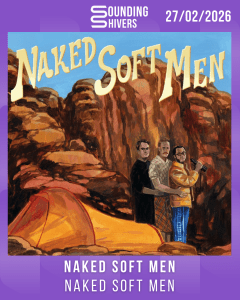
 Sounding Shivers